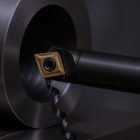
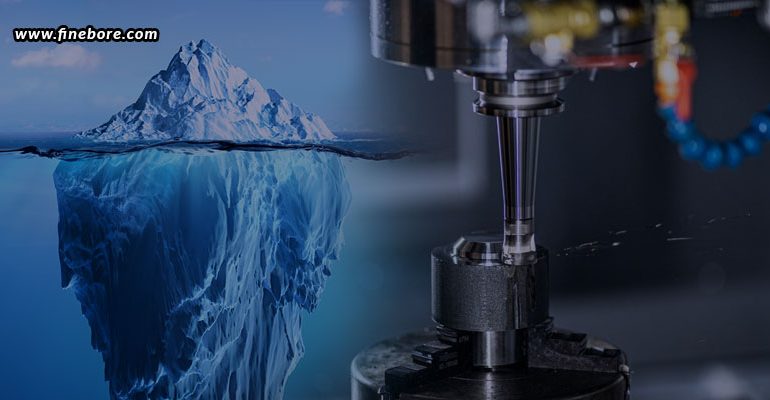
In precision manufacturing, even the smallest dimensional variation can affect product quality and performance. Industries like automotive, aerospace, medical equipment, and heavy engineering rely on accurate boring operations to achieve precise internal dimensions and superior surface finish. However, poor boring tool selection can create serious manufacturing challenges, including higher rejection rates, repeated rework, excessive machine downtime, unstable machining conditions, and increased tooling costs. These issues not only reduce productivity, but also raise overall production expenses. In high-volume manufacturing environments, even minor inefficiencies can result in significant financial losses, making proper boring tool selection essential for consistent and cost-effective machining performance.
How poor boring tool selection impacts manufacturing
Improper tool selection can result in a number of machining issues, such as poor surface finish, dimensional inaccuracy, tool wear, reduced tool life, machine downtime, production interruptions, increased rejection, and lots of reworking. A boring tool that is unsuitable for the material, hole depth, tolerance requirement, or machine setup can create several operational challenges. These problems are not always immediately visible, but they significantly increase manufacturing costs over time.
- Poor surface finish and dimensional inaccuracy
Internal surface quality of components like hydraulic cylinders, bearing housings, and sealing surfaces are extremely important for proper functionality. Poor tooling selection can result in rough surfaces, inconsistent finishes, geometric inaccuracies, and chatter marks. Such surface defects may lead to increased friction, reduced sealing efficiency, premature component wear, and assembly problems. These issues often create long-term reliability concerns in finished products. Proper boring tools, on the other hand, provide better stability, optimized cutting geometry, and improved chip control, all of which contribute to superior surface finish and dimensional accuracy.
- Tool wear and reduced tool life
Improper insert geometry, insufficient rigidity, or unsuitable tool material may increase cutting forces and heat generation during machining. As a result, inserts wear out more quickly and require frequent replacement. This brings on higher tooling consumption, increased insert inventory requirements, more frequent machine stoppages, and reduced machining consistency. Selecting the correct boring tool for the workpiece material and machining conditions helps overcome boring tools wear issues and extend tool life, while maintaining consistent machining performance.
- Machine downtime and production interruptions
Machine downtime is one of the costliest issues in manufacturing environments. Poor tooling often causes unstable machining conditions, leading to frequent tool changes, tool breakage, vibration issues, machine stoppages, and setup adjustments. Every minute of downtime affects production schedules and reduces machine utilization efficiency. Tool changes and vibration issues mean operations being stopped midway and repeated adjustments being made, all of which add to wasted time and labour. Using high-quality boring tools specifically designed for the application improves machining stability and reduces unexpected interruptions.
- Increased rejection rates
One of the most direct consequences of poor boring tool selection is a higher rejection rate. Precision manufacturing requires components that meet strict dimensional tolerances and surface finish requirements. If the boring tool lacks rigidity, stability, or proper cutting geometry, the finished hole may develop defects like tapered dimensions, poor roundness, surface roughness, or oversized or undersized diameters. Such rejected parts mean manufacturers have wasted raw materials and machining time, along with unnecessary labour expenses incurred. Selecting the proper boring tool significantly reduces the risk of dimensional errors and improves consistency across production batches.
- The cost of rework operations
When components fail to meet specifications, but remain repairable, manufacturers often attempt rework operations instead of scrapping the part completely. However, this still brings on hidden costs like additional machine utilization, extra labour hours, delayed production schedules, and additional tool wear. Rework also reduces overall manufacturing efficiency as machines that should be producing new parts are instead correcting existing ones. In some cases, repeated machining may also weaken the component or alter its dimensional integrity, especially when tight tolerances are involved. Proper boring tool selection helps minimize the need for rework by ensuring stable and accurate machining from the beginning.
- Higher production costs
The combined effect of rejection, rework, downtime, and tool wear ultimately leads to increased production costs. Manufacturers often focus heavily on the initial purchase price of a boring tool, while overlooking its long-term operational impact. A lower-cost tool may initially appear economical, but if it causes frequent failures or poor machining performance, the overall cost of production increases significantly. Hidden costs associated with poor tooling include scrap material losses, reduced productivity, increased labour expenses, and idle machine time. In contrast, investing in the right tooling solution improves process reliability and lowers total manufacturing costs over time.
How proper tool selection improves manufacturing efficiency and long-term performance
Selecting the right boring tool improves far more than dimensional accuracy. Proper tooling enhances machining stability, productivity, surface finish, and overall manufacturing efficiency while reducing operational costs and downtime.
Key benefits of proper tool selection
- Improved machining stability: Proper boring tool selection reduces vibration levels and maintains stable cutting conditions for consistent machining performance.
- Longer tool life: The right insert geometry and tool material significantly reduce wear and extend the operational life of cutting tools.
- Higher productivity: Efficient boring tools support faster machining speeds and reduced cycle times, helping manufacturers improve overall production output.
- Better surface finish: Optimized tooling delivers smoother and more accurate internal surfaces, improving dimensional consistency and component performance significantly.
- Reduced downtime: Reliable boring tools minimize unexpected machine stoppages and reduce the need for frequent operator adjustments during machining.
- Lower production costs: Improved tooling efficiency helps reduce scrap generation, rework operations, tooling expenses, and overall manufacturing production costs.
Effective boring tool selection requires careful evaluation of factors such as workpiece material, hole diameter, tolerance requirements, machine capability, cutting parameters, and overall machining conditions. Choosing the right tooling solution helps manufacturers achieve better machining stability, improved surface finish, reduced vibration, and higher production efficiency. In demanding industrial applications where precision and consistency are critical, manufacturers often rely on FineTech Toolings as their trusted boring tools manufacturers in India. With high-quality precision boring tools, their precision-engineered tooling solutions are designed to deliver stable, accurate, and efficient machining performance across a wide range of boring applications.
The hidden cost of poor boring tool selection goes far beyond the initial tool price. Improper tooling can increase rejection rates, create expensive rework operations, cause machine downtime, accelerate tool wear, and reduce manufacturing efficiency. In precision machining, boring tool performance directly influences dimensional accuracy, surface finish, and production consistency. Even minor improvements in machining stability can generate significant long-term cost savings. Proper boring tool selection improves rigidity, reduces vibration, enhances surface quality, and extends tool life. Manufacturers investing in reliable tooling solutions benefit from improved productivity, lower operational costs, and consistent machining performance in increasingly demanding precision manufacturing environments.