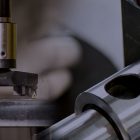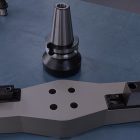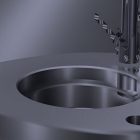
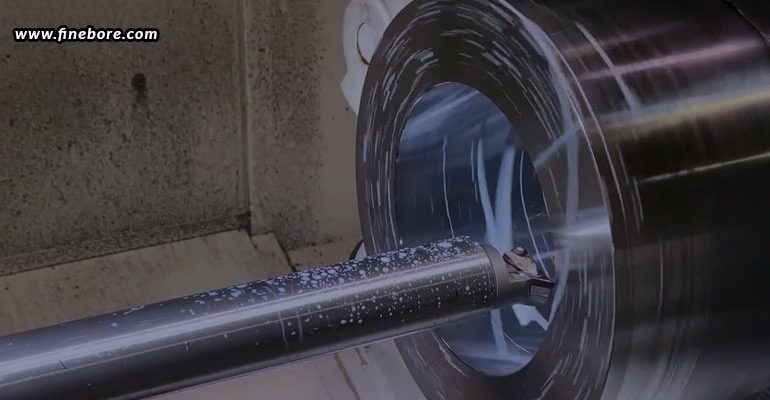
Heavy engineering industries play a crucial role in producing some of the largest and most intricate components utilized in contemporary infrastructure and industrial operations. These components, which include turbine casings, pump housings, gearbox bodies, hydraulic cylinders, and substantial parts of industrial machinery, often necessitate highly precise internal features to guarantee proper assembly and optimal performance. Among the various machining processes, the task of machining large diameter holes stands out as particularly challenging due to unique issues related to tool stability, dimensional accuracy, machine capability, vibration control, and material removal. Even slight deviations can significantly impact component performance, assembly precision, and long-term reliability. To achieve accurate internal dimensions in large components, meticulous planning, specialized tooling, and advanced machining techniques are essential.
Understanding large diameter hole machining
Large diameter hole machining typically involves boring and enlarging internal diameters in heavy components that can weigh several tons. These holes often serve critical purposes, such as bearing seats, turbine housings, pump casings, gearbox assemblies, hydraulic cylinders, valve bodies, and frames for industrial machines. The bores must adhere to stringent standards for dimensional accuracy, roundness, concentricity, alignment, and surface finish. Given that these components are frequently employed in high-load and high-precision settings, maintaining tight tolerances is imperative. The critical nature of these features in relation to component performance and assembly accuracy makes precision throughout the machining process essential. Precision has a direct impact on reliability and operational lifespan. Therefore, machining large diameter holes transcends mere material removal; it is fundamentally about achieving exact specifications across extensive dimensions.
Key challenges in machining large diameter holes
Manufacturers must overcome several technical challenges when machining large diameter holes in heavy engineering components to achieve consistent quality and reliable component performance.
- Challenge 1: Maintaining dimensional accuracy
One of the biggest challenges in machining large diameter holes is maintaining dimensional accuracy throughout the entire bore. As bore size increases, achieving consistent measurements becomes more difficult. This is because large workpieces often experience material stress variations, uneven cutting forces, thermal expansion, and structural deformation; all of which influences the final dimensions of the hole. Even slight variations can lead to oversized or undersized holes, tapered holes, or out-of-round conditions, which is why manufacturers must carefully control machining parameters and tooling setups to maintain the required accuracy.
- Challenge 2: Tool rigidity and deflection
Large bores frequently require long-reach tooling to access internal surfaces. As tool length increases, rigidity decreases, making the tool more susceptible to deflection under cutting loads, which further results in inconsistent diameters, surface finish defects, tapered holes, and reduced accuracy. The challenge becomes bigger when machining deep and large-diameter internal features simultaneously. To minimize these issues, manufacturers are required to use rigid boring systems designed to withstand higher cutting forces while maintaining stability throughout the machining process.
- Challenge 3: Vibration and chatter
During boring operations, cutting forces can induce vibrations within the tool, workpiece, or machine structure, which may develop into chatter. This negatively affects machining quality by resulting in poor surface finish and reduced dimensional accuracy. It also results in excessive machine stress, increased tool wear, and higher noise levels. Controlling vibration requires a combination of proper tooling selection, optimized cutting parameters, machine rigidity, and stable workpiece clamping.
- Challenge 4: Machine tool capability
Not all machine tools are capable of handling large diameter boring operations effectively. Heavy engineering applications often require machines with large working envelopes, high structural rigidity, powerful spindles, precision positioning systems, and advanced control capabilities. If the machine lacks these essentials, it may experience structural vibration, reduced accuracy, instability, and increased wear. Selecting the right machine with the apt features for the application is therefore a critical factor in large-hole machining.
- Challenge 5: Substantial material removal
Large diameter holes often involve substantial material removal. Removing large volumes of material efficiently while maintaining accuracy presents a significant challenge. Manufacturers are required to balance productivity, surface finish, and dimensional control. Aggressive cutting parameters may increase productivity, but can also generate excessive heat and vibration. On the other hand, conservative cutting conditions may improve accuracy, but reduce production efficiency. Finding the optimal balance is thus essential for achieving both quality and productivity goals.
- Challenge 6: Thermal expansion and heat generation
As material is removed, friction and cutting forces generate heat in the cutting tool, workpiece, and machine. This results in thermal expansion, which can affect dimensional accuracy and bring about fitment problems, tolerance deviations, and reduced concentricity. Since large components often require tight tolerances, even minor temperature-related distortions can impact quality. Effective temperature management is therefore essential for maintaining machining accuracy and achieving consistent results.
- Challenge 7: Achieving proper surface finish
Maintaining surface quality in large diameter boring is challenging. Larger bores require stable cutting conditions to maintain uniform surface quality throughout the machining process. But, as the bore size increases, the tool geometry, cutting speed, feed rate, insert condition, and tool vibration can all affect the surface finish. Careful control of machining parameters, combined with proper tooling selection and maintenance, is necessary to consistently achieve the desired surface finish in large diameter boring operations.
Applications that demand large diameter hole machining
Large diameter hole machining is essential in heavy engineering industries where components require accurate internal dimensions, precise alignment, and superior surface finish. Common applications include turbine components, large housings, and industrial machinery parts.
- Turbine components: Turbine casings and associated parts typically have significant internal diameters, necessitating strict standards for concentricity, alignment, and surface finish. Even slight dimensional discrepancies can impact operational efficiency, balance, and long-term reliability.
- Large housings: Elements like gearbox housings, pump casings, compressor housings, and industrial drive housings feature essential bores that require precise positioning and concentricity. Precision machining is vital to guarantee proper assembly and seamless equipment functionality.
- Industrial machinery components: Heavy machinery utilized in mining, construction, steel processing, and hydraulic systems often includes large-diameter bores. These components must endure considerable loads while ensuring precise fits, making accurate boring operations essential for optimal performance and longevity.
The role of boring tools in large diameter machining
The effectiveness of the boring operation depends heavily on tool rigidity, tool balance, insert geometry, and cutting stability. Well-designed boring systems help improve dimensional control, enhance surface finish, and minimize vibration. The selection of the right boring tools becomes increasingly important as bore size and machining complexity increase.
- The tool geometry should be carefully matched to the application requirements to ensure accuracy, stability, and efficiency.
- Proper workpiece support and secure clamping help minimize movement, vibration, and dimensional inaccuracies during machining operations.
- Feed rates and cutting speeds should be optimized to achieve the right balance between productivity and machining stability.
A well-planned machining strategy reduces risk and improves overall process reliability. Manufacturers often rely on trusted boring tools suppliers in Bangalore like FineTech Toolings to deliver high rigidity, stability, and accuracy. Their solutions support efficient machining, improved surface finish, and reliable performance in demanding applications.
Machining large diameter holes presents one of the most significant challenges in heavy engineering. Whether it involves creating turbine components, parts for industrial machinery, gearbox housings, or sizable pump casings, manufacturers face various obstacles concerning dimensional accuracy, tool rigidity, vibration control, heat management, and surface finish quality. The complexity and size of these components render precision boring an essential process that has a direct impact on product performance, reliability, and operational efficiency. To achieve consistent outcomes, a blend of appropriate tooling, capable machine tools, optimized cutting conditions, and meticulous process planning is necessary. As the heavy engineering sector increasingly requires larger and more intricate components, the necessity of mastering large diameter hole machining will continue to escalate. Manufacturers that effectively tackle these challenges can attain higher quality standards, enhanced productivity, and greater long-term success in manufacturing.