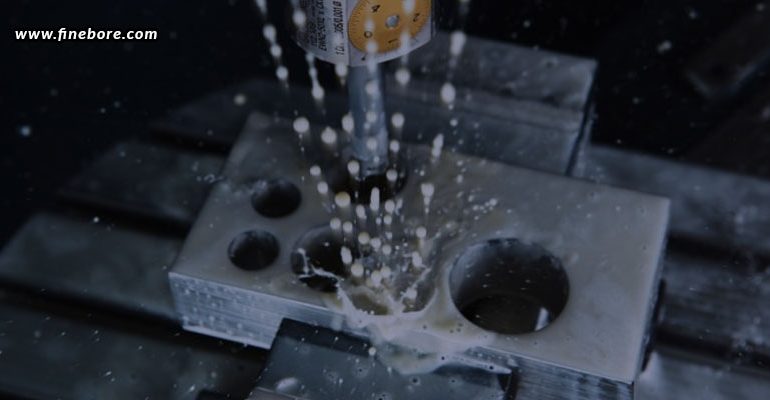
Boring processes play a crucial role in precision machining, particularly when internal diameters demand tight tolerances and superior surface finishes. Despite advancements in tooling and CNC technology, boring bars continue to be quite sensitive on the shop floor. Since they operate deep within the workpiece with limited rigidity, even minor adjustments in setup, cutting conditions, or tool status can lead to significant problems. Common issues include chatter, runout, subpar surface finish, and dimensional inconsistencies. Nevertheless, most of these challenges do not necessitate extensive changes or expensive upgrades. Often, small, targeted modifications can swiftly restore stability, enhance performance, and guarantee consistent machining outcomes in boring operations.
Understanding why boring bars are so sensitive
Before jumping into the solutions, it is essential to understand the underlying causes of instability in boring operations. A boring bar functions similarly to a cantilever beam, with one end secured in the tool holder and the other extending into the workpiece. This design inherently diminishes rigidity, and the effect intensifies as the overhang lengthens. In such conditions, the quality of the boring bar becomes critical. Tools from FineTech Toolings, known as the trusted precision boring bars manufacturers in Bangalore, help improve rigidity and maintain stable machining performance. Consequently, cutting forces can easily induce deflection, and even minor vibrations can escalate rapidly during machining. Small setup inaccuracies, which might appear trivial in other operations, can escalate into significant machining problems in boring tasks. This sensitivity renders the process highly responsive to variations in cutting conditions, tool status, or alignment. Thus, even slight enhancements can exert a substantial and immediate influence on overall performance and machining stability.
Fixing chatter in boring operations
- Quick Fix: Reduce overhang
One of the quickest methods to mitigate chatter is to shorten the extension of the boring bar. A reduced overhang enhances rigidity and stability. If this is not feasible, consider using damped or anti-vibration boring bars to better control vibrations.
- Quick Fix: Adjust cutting speed
The speed at which you cut has a significant impact on the occurrence of chatter. Slightly lowering the speed can help shift the process away from unstable vibration areas. Even minor adjustments can lead to significant enhancements in stability and the quality of the surface finish.
- Quick Fix: Modify depth of cut
Decreasing the depth of cut reduces the cutting forces acting on the boring bar. This helps to minimize deflection and vibration, thereby stabilizing machining conditions and enhancing the overall surface finish during boring tasks.
- Quick Fix: Check insert condition
Damaged or worn inserts can heighten vibration and diminish cutting efficiency. Timely replacement of inserts reinstates sharp cutting performance, reduces chatter, and enhances both surface finish and tool longevity without the need for further parameter adjustments.
Addressing runout problems
- Quick Fix: Verify tool holding
Inadequate clamping is a significant factor contributing to runout in boring tasks. Confirm proper seating, ensure contact surfaces are clean, and apply uniform torque to uphold alignment and minimize eccentricity during machining operations.
- Quick Fix: Examine spindle condition
Wear, imbalance, or misalignment of the spindle can lead to runout throughout the entire setup. Routine inspection and maintenance are essential for ensuring rotational precision, enhancing machining accuracy, and preserving consistent bore dimensions.
- Quick Fix: Clean contact surfaces
Debris, chips, or burrs between the tool and holder hinder proper seating. Comprehensive cleaning guarantees full contact, enhances alignment, decreases runout, and improves overall machining accuracy and surface finish quality.
Correcting tolerance deviations
- Quick Fix: Stabilize cutting conditions
Inconsistent cutting forces result in dimensional variations during boring. By keeping speed, feed, and depth of cut steady, you can achieve uniform material removal, which guarantees precise and repeatable bore dimensions.
- Quick Fix: Check thermal expansion
Heat accumulation leads to the expansion of both the tool and workpiece, which can impact tolerances. Adequate coolant application and temperature regulation minimize thermal distortion, ensuring stable dimensions and enhanced machining accuracy during ongoing operations.
- Quick Fix: Identify tool wear
Over time, tool wear diminishes cutting sharpness, resulting in dimensional inaccuracies. Conducting regular inspections and replacing inserts promptly helps maintain consistent cutting performance and ensures precise bore sizes throughout the production process.
Minimizing surface finish issues
- Quick Fix: Enhance rigidity
Increasing the rigidity of the setup by reducing overhang and reinforcing clamping helps to decrease vibration. This improvement directly contributes to better surface finish quality by providing stable cutting conditions and consistent tool engagement during machining.
- Quick Fix: Optimize feed rate
An incorrect feed rate can lead to rubbing or excessive cutting load. Modifying the feed to achieve the correct chip thickness promotes a smoother cutting action, which enhances surface finish and decreases tool wear in boring processes.
- Quick Fix: Use proper insert geometry
Utilizing positive rake geometry lowers cutting resistance and vibration during boring operations. This leads to a more efficient chip flow, reduced cutting forces, and a notable enhancement in the surface finish quality of machined parts.
Managing tool wear and breakage
- Quick Fix: Match the insert to the material
Using the wrong insert grades speeds up wear and shortens tool lifespan. Choosing the right grade guarantees optimal cutting performance, enhanced durability, and consistent machining across various workpiece materials.
- Quick Fix: Reduce cutting forces
Reducing the depth of cut or cutting speed alleviates stress on the tool. This action helps avert early breakage, boosts stability, and prolongs overall tool life during challenging boring tasks.
- Quick Fix: Ensure proper chip evacuation
Inefficient chip flow results in recutting, heat accumulation, and tool damage. Correct coolant direction and suitable chip-breaker selection facilitate smooth chip removal, decreasing wear and ensuring stable machining performance.
Preventive measures for consistent boring operations
While immediate solutions can be beneficial, enduring stability is achieved through regular preventive measures.
- Uphold proper setup discipline: Confirm correct alignment, secure clamping, and appropriate tool seating before commencing machining to ensure stability, precision, and reliable boring bar performance.
- Regularly monitor tool condition: Frequently inspect inserts and replace them before wear impacts cutting efficiency, surface quality, or dimensional precision during boring tasks.
- Maintain balanced parameters: Steer clear of extreme cutting conditions; utilize balanced speed, feed, and depth of cut to uphold stability and minimize vibration in boring activities.
- Enhance operator sensitivity: Skilled operators should be able to detect early signs of instability through variations in sound, changes in vibration, and patterns in chip formation during machining.
Most challenges associated with boring bars do not necessitate intricate solutions. In fact, many issues such as chatter, runout, tolerance discrepancies, and subpar surface finish can often be addressed through minor, focused adjustments. By enhancing rigidity, fine-tuning cutting parameters, preserving tool condition, and ensuring proper setup discipline, machinists can swiftly restore stability and performance on the shop floor. Attention to details such as alignment, insert condition, and balanced cutting conditions is crucial for achieving consistent results. Ultimately, effective boring operations hinge not on drastic changes or costly upgrades, but on maintaining steady control of the fundamentals. With the right quick fixes and disciplined practices, boring bars can reliably provide accurate, stable, and efficient machining performance every time.