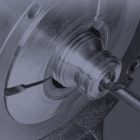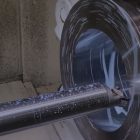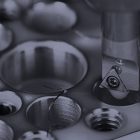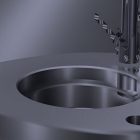
In today’s manufacturing environment, achieving precise bore dimensions is essential for ensuring component performance, reliability, and assembly accuracy. Industries like automotive, aerospace, medical equipment, and heavy engineering depend on tight tolerances that leave little room for error. While machine tools are often credited for machining precision, bore accuracy is influenced just as much by the tooling used during the operation. Among these tools, the boring head plays a crucial role in determining dimensional consistency, surface finish, and geometric accuracy. Understanding its impact helps manufacturers optimize machining processes, reduce variation, and achieve more predictable, high-quality results across production runs.
Understanding bore accuracy
Bore accuracy is not just about being able to bore a hole with the correct diameter. It extends far beyond that. A truly accurate bore must meet several critical requirements simultaneously along with the correct diameter. The list includes roundness, straightness, cylindricity, concentricity, and surface finish quality. A bore may appear dimensionally acceptable when measured at a single point, yet still fail functional requirements due to taper, out-of-round conditions, or poor surface finish. Achieving all these characteristics consistently requires precise control of the cutting process. Since the boring head is the component responsible for carrying, positioning, and adjusting the cutting edge, it becomes the primary determinant of bore quality.
The role of the machine versus boring head
A machine tool provides the foundation for any machining operation. It controls spindle rotation, axis movement, positioning accuracy, rigidity, and power delivery, all of which create the conditions needed for precision machining. A high-quality machine helps ensure stable and accurate movement, but it is only one part of the overall process.
The boring head is the component that actually performs the cutting operation and directly influences the final bore quality. It controls the position of the cutting edge, adjustment accuracy, tool stability, balance, and resistance to deflection. These factors determine the bore’s size, geometry, and surface finish. Even on a highly accurate machine, a poorly designed or improperly adjusted boring head can lead to dimensional errors and inconsistent results.
- Cutting edge
At the core of bore accuracy lies the positioning of the cutting edge. A minor radial error in tool adjustment can lead to a considerable dimensional deviation in the final bore. For instance, an adjustment error of just a few microns can directly impact the bore diameter and potentially result in a part falling outside acceptable tolerance limits. Precision boring heads are meticulously designed to offer fine adjustment increments, dependable locking mechanisms, minimal backlash, and repeatable positioning. These characteristics enable operators to execute highly controlled diameter corrections without introducing uncertainty into the process. If the cutting edge cannot be accurately positioned, even the most sophisticated CNC machine will struggle to produce a precise bore.
- Repeatability
The measure of manufacturing success is not simply the production of a single accurate component. True success is realized through the creation of hundreds or thousands of identical components. This is where repeatability becomes essential. A boring head must reliably return to the same cutting position following adjustments, insert changes, or production interruptions. Inadequate repeatability leads to various challenges, including dimensional variation, increased inspection demands, higher scrap rates, frequent machine offsets, and diminished process confidence. Precision boring heads are engineered to resolve these problems by ensuring consistent tool positioning throughout production runs. Consequently, manufacturers can achieve predictable machining results and minimize variation from one part to another.
- Tool deflection
One of the frequently neglected factors contributing to bore inaccuracy is tool deflection. Throughout the machining process, cutting forces are continuously applied to the boring tool. These forces strive to bend or shift the tool from its designated position. When deflection takes place, various problems can arise, including oversized bores, tapered bores, poor roundness, surface finish imperfections, and inconsistent dimensional outcomes. The degree of deflection is significantly influenced by the design and rigidity of the boring head. A sturdy machine tool cannot eliminate tool deflection if the boring head does not possess adequate structural integrity. High-quality boring heads are designed with strong construction and optimized geometry to reduce deformation under cutting loads. This ensures that the cutting edge remains stable and preserves dimensional accuracy throughout the machining process.
- Stability
Numerous manufacturers prioritize spindle speed, feed rates, and machine power when aiming for productivity enhancements. Nevertheless, bore accuracy relies more on stability than on sheer machining speed. An unstable boring head can lead to chatter, vibration, harmonic oscillations, surface irregularities, and dimensional inconsistencies. Even slight vibrations can impact bore geometry and surface quality. Precision boring heads are crafted to enhance dynamic stability by managing mass distribution, balance, and structural rigidity. The outcome is a smoother cutting action, better surface finish, and more uniform bore dimensions. In the absence of a stable boring head, efforts to boost machine performance often result in greater variation instead of enhanced productivity.
- Fine adjustment
A key feature of precision boring heads is their ability for fine tuning. In contemporary manufacturing, tolerances are often specified in microns. Meeting these standards necessitates highly accurate control over the cutting diameter. Sophisticated adjustment systems enable operators to make minor diameter modifications, ensure consistent settings, decrease setup duration, limit trial cuts, and enhance process reliability. The effectiveness of the adjustment system significantly impacts the capacity to achieve tight tolerances efficiently. While a machine tool may offer precise positioning, it is the adjustment mechanism of the boring head that dictates the precise diameter being machined.
Why modern manufacturing demands better boring heads
Modern manufacturing is placing greater demand on machining processes than ever before. Components are being designed with tighter tolerances, more complex geometries, and higher performance expectations. At the same time, manufacturers are under increasing pressure to maintain consistent quality while improving productivity and reducing waste. As acceptable levels of variation continue to shrink, machine accuracy alone is no longer enough to guarantee the required results. Precision must be maintained at the point where cutting actually occurs. This has increased the importance of selecting high-quality boring heads, which play a direct role in bore accuracy, process stability, repeatability, and surface finish. Today, a precision boring head is not simply a tool holder; it is a critical contributor to overall machining performance and product quality. To meet the growing precision requirements of today, manufacturers increasingly rely on tooling solutions engineered specifically for high-accuracy machining applications. As top boring head manufacturers in India, FineTech Toolings provides boring solutions designed to support demanding tolerance requirements, machining stability, repeatability, and consistent bore quality across a wide range of industrial applications.
While a machine tool provides the foundation for precision machining, the final bore quality is largely determined by the boring head. Factors such as cutting edge positioning, rigidity, stability, repeatability, and adjustment accuracy all directly influence the outcome of the boring operation. Even the most advanced machine cannot fully compensate for tooling that introduces vibration, deflection, or dimensional variation. As manufacturers face tighter tolerances and higher quality expectations, the importance of precision tooling continues to grow. Investing in a high-quality boring head helps improve consistency, reduce variation, and achieve more predictable machining results. Ultimately, the machine creates the conditions for accuracy, but the boring head plays the decisive role in producing an accurate, high-quality bore.