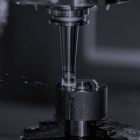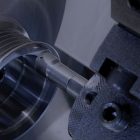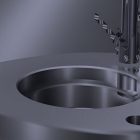
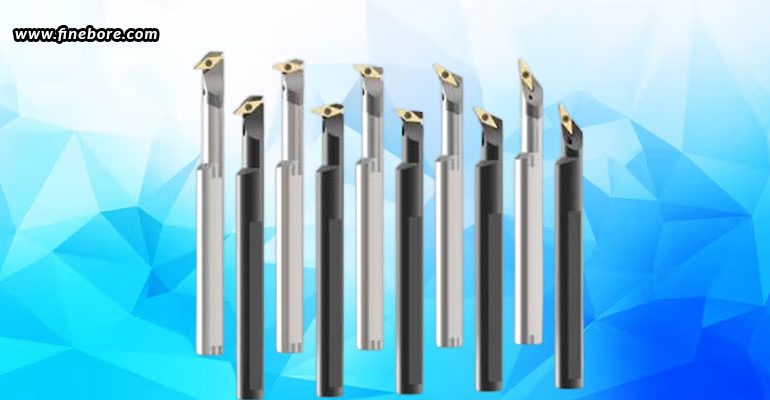
Micro boring requires precise control over cutting forces, tool geometry, heat generation, chip formation, and dimensional accuracy, particularly when machining small-diameter bores with tight tolerances. Insert selection plays an important role in maintaining machining stability and achieving consistent bore quality. The right insert should match the workpiece material, bore size, depth of cut, machining conditions, tolerance requirements, and surface-finish expectations. Factors such as insert grade, coating, cutting-edge geometry, nose radius, and edge preparation directly affect cutting performance, tool life, cutting forces, and bore accuracy. Choosing the right combination helps minimize vibration, reduce tool deflection, improve surface finish, and maintain consistent dimensional accuracy during demanding micro boring operations.
Why insert selection matters in micro boring
Micro boring differs from conventional rough boring because material removal is often limited, while dimensional accuracy, bore geometry, and surface quality become much more important. The insert must therefore cut predictably without generating unnecessary cutting forces or vibration. A suitable insert should balance cutting-edge sharpness, edge strength, wear resistance, dimensional stability, surface-finish capability, and compatibility with the workpiece material. This balance becomes particularly important because micro boring bars are often slender and have limited rigidity. Excessive cutting forces can cause the boring bar to deflect or vibrate, affecting bore diameter, roundness, cylindricity, and surface finish. Insert selection should therefore be treated as part of the complete micro boring system. For manufacturers seeking a complete tooling solution, FineTech Toolings offers every micro boring kit designed for accurate and stable machining of small-diameter bores, combining suitable boring tools and inserts for consistent performance.
Choosing the right insert grade
Insert grade influences cutting stability, tool life, dimensional accuracy, and surface finish, depending on material, cutting conditions, tool life, and setup stability.
- Fine-grain carbide for general micro boring
Fine-grain carbide provides a balance of hardness, wear resistance, toughness, and edge stability for precision micro boring. Its ability to maintain a sharp cutting edge helps reduce cutting forces, support dimensional accuracy, and deliver consistent performance during light finishing operations.
- Advanced grades for difficult materials
Difficult-to-machine and hardened materials may require cermets, ceramics, or CBN for greater wear resistance and thermal stability. Selection depends on workpiece hardness, cutting speed, depth of cut, cut continuity, and setup stability. CBN suits hardened ferrous materials, while ceramics support specific high-speed applications.
- Match the grade to the workpiece
Workpiece material should guide insert grade selection because different materials place different demands on the cutting edge. Non-ferrous alloys often benefit from sharp edges that minimize adhesion, while hardened materials require greater wear resistance. The ideal grade balances toughness, edge stability, performance, and tool life.
Understanding insert coatings
Insert coatings improve wear resistance, thermal stability, and cutting performance while preserving the sharp cutting edge essential for low-force micro boring.
- Coatings for wear resistance
A suitable coating protects the cutting edge from abrasive and adhesive wear, helping maintain consistent bore dimensions during longer production runs. However, wear resistance should be balanced with edge sharpness, as excessive coating thickness or unsuitable characteristics may increase cutting forces.
- Coatings for high-temperature applications
Some coating technologies provide greater resistance to elevated cutting temperatures, making them useful when machining difficult materials or operating at higher cutting speeds. Their thermal performance should be evaluated alongside insert geometry, cutting parameters, workpiece material, and overall machining stability.
- Coatings for non-ferrous materials
When machining aluminium and other non-ferrous materials, uncoated carbide or specialized coatings may help maintain edge sharpness while reducing material adhesion and built-up edge. Selection should consider workpiece material, cutting mechanism, required tool life, and the edge characteristics needed for precision boring.
Why edge sharpness matters in micro boring
Cutting-edge sharpness has a particularly strong influence on micro boring performance. When only a small amount of material is being removed, the cutting edge must engage the workpiece effectively without generating unnecessary forces. A sharp cutting edge reduces the force required to shear the material and can help minimize tool deflection, vibration, and heat generation. These advantages are particularly important when using a small-diameter boring bar with limited rigidity. A sharp edge can therefore contribute to lower cutting forces, better dimensional control, improved surface finish, reduced vibration, and cleaner material removal. However, maximum sharpness is not always the correct solution. An extremely sharp edge can become fragile and more susceptible to chipping, particularly when machining harder materials or operating under unstable cutting conditions. This is why edge preparation must be considered together with edge sharpness.
Edge preparation
Edge preparation balances cutting-edge sharpness and strength, depending on workpiece material, depth of cut, cutting conditions, and machining stability.
- Sharp edges
Sharp edges are generally preferred for light finishing cuts, softer materials, and applications requiring low cutting forces and excellent surface finish. However, extremely sharp edges have less supporting material and may be more susceptible to chipping under higher mechanical loads or interrupted cutting.
- Honed edges
A honed edge strengthens the cutting tip by slightly rounding the cutting edge, improving durability while maintaining controlled cutting performance. However, excessive honing increases the effective edge radius and cutting forces, which can be undesirable when machining small-diameter bores with slender boring bars.
- Chamfered edges
A chamfered edge provides greater mechanical strength and suits demanding cutting conditions. However, its stronger geometry generally generates higher cutting forces than a sharp edge. It should therefore be selected carefully in micro boring applications where tool deflection, vibration, and dimensional accuracy must be controlled.
- Match edge preparation to cutting conditions
There is no universal edge preparation for every micro boring application. Softer materials and light finishing cuts generally benefit from sharper edges, while harder materials and heavier loads may require stronger preparation. Stable setups can prioritize sharpness, whereas unstable or interrupted cutting requires greater edge strength.
How insert geometry affects micro boring
Insert grade and coating are only part of the selection process. Cutting-edge geometry also has a direct influence on cutting forces, chip formation, surface finish, and tool stability. Important geometric considerations include rake angle, clearance angle, nose radius, cutting-edge length, and chip breaker design. For micro boring, the geometry should generally support low cutting forces, predictable chip formation, adequate clearance within the bore, and stable cutting action. A positive cutting geometry can help reduce the force required to cut the material, making it particularly useful when machining with slender boring bars. At the same time, the geometry must provide sufficient edge strength for the material and cutting conditions. Clearance is also important because insufficient clearance inside a small bore can increase rubbing and interfere with the intended cutting action.
Choosing the right nose radius
Nose radius has a significant influence on surface finish, cutting forces, edge strength, and tool behaviour. A larger nose radius can produce a smoother surface finish under suitable cutting conditions and can provide greater edge strength. However, it also increases the contact area between the insert and workpiece, which can increase cutting forces and potentially promote vibration. A smaller nose radius can help limit cutting forces and accommodate small internal features, making it useful for certain micro boring applications. However, a very small radius may provide less edge strength and may not always deliver the best surface finish. The selected nose radius should therefore correspond to the bore diameter, required surface finish, depth of cut, feed rate, and rigidity of the machining setup rather than being selected independently.
Managing chip control inside small bores
Chip evacuation becomes particularly challenging in micro boring because there is very little space inside a small bore for chips to escape. Long, uncontrolled chips can become trapped inside the hole, interfere with the cutting edge, damage the finished surface, or recut against the workpiece. Effective chip control is therefore important for maintaining consistent machining performance. An appropriate chip breaker can help produce shorter and more manageable chips. However, the chip breaker must be matched to the relatively small depth of cut and feed rates commonly used in precision boring. A chip breaker designed for heavy roughing may not function effectively when only a small amount of material is being removed. Insert geometry and cutting parameters should therefore be selected together to produce predictable chip formation.
A practical framework for selecting micro boring inserts
Selecting the right micro boring insert requires evaluating the workpiece, machining objective, tooling setup, tolerance requirements, and expected production conditions.
- Start with the machining goal
Begin with the machining objective, prioritizing sharp edges and low cutting forces for finishing, while production applications may require greater wear resistance.
- Consider the workpiece material
Workpiece material determines the appropriate insert grade, coating, geometry, and edge preparation, with different requirements for non-ferrous, steel, stainless, and hardened materials.
- Match the insert to the machining setup
Consider bore diameter, tolerances, surface finish, tool overhang, boring-bar rigidity, spindle stability, workholding, and cutting parameters to ensure compatible insert performance.
- Validate the selection under actual conditions
Test the selected insert under actual machining conditions and monitor bore accuracy, surface finish, wear, vibration, chip formation, and tool life for validation.
Micro boring performance depends on the complete machining system, including the machine, tool holder, boring bar, insert, workpiece, and cutting parameters. Even a high-performance insert cannot overcome excessive tool flexibility, runout, poor workholding, or an unstable setup. At small bore diameters and tight tolerances, insert grade, coating, geometry, nose radius, edge preparation, and chip control directly influence cutting forces, vibration, dimensional accuracy, surface finish, and tool life. Selection should begin with the workpiece material and machining objective, followed by evaluating tooling rigidity, bore dimensions, tolerances, cutting conditions, and production requirements. When properly matched, the insert supports stable cutting, consistent bore quality, predictable tool life, and reliable micro boring performance.