In precision machining, tool settings determine the final result. Among the many variables that affect machining performance, boring bar overhang is one of the most important. Whether boring deep holes in hardened steel or finishing tight tolerance hydraulic components, the length of the boring bar has a direct impact on stiffness, vibration levels, dimensional accuracy, and surface finish. In this blog, we’ll take a closer look at what overhang on a boring bar actually means, what is too much, and how it can be optimized to achieve consistent, high-quality machining.
What is a boring bar overhang?
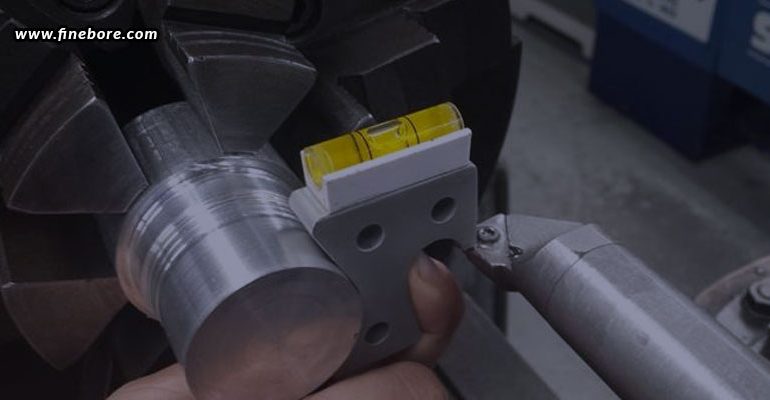
Boring bar overhang is the length of the tool that extends beyond the tool holder or turret during machining. It is typically measured from the clamping point to the cutting edge of the insert. In simple terms, it is the unsupported length of the tool. Achieving deeper internal features requires increased reach, but also presents problems, primarily related to tool deflection and vibration.
Why overhang matters in boring operations
Internal machining uses long, slender tools in confined spaces, increasing instability; as overhang grows, cantilever effects intensify, causing bending, vibration, and deflection that impact performance. This directly impacts three important aspects:
- Rigidity
Rigidity is the ability of a boring bar to withstand deformation under load, and is the basis for stable machining performance. As the overhang increases, the stiffness decreases exponentially. This means that even a small amount of elongation can significantly reduce tool stiffness. This relationship is usually understood in terms of the length-to-diameter (L/D) ratio. L/D up to 3 provides high stability, 4 to 6 requires careful optimization, and values above 6 have a high risk of vibration and deflection. Reduced stiffness increases tool deflection, reduces dimensional control, increases vibration levels, and shortens tool life, making process control difficult under harsh machining conditions.
- Accuracy
Machining accuracy is directly affected by boring bar overhang, especially in applications where tight tolerances are required. When cutting forces are applied to a long, unsupported tool, deflection is inevitable, causing the tool to deviate from its intended cutting path. This results in size inaccuracies like larger holes, tapered holes, lack of concentricity, and inconsistent diameters along the length of the hole. Even small variations can lead to measurable variations, making it difficult to maintain part accuracy, repeatability, and consistency in precision manufacturing processes.
- Surface finish
Surface finish is often the most visible indicator of tool misalignment, and overhang plays an important role in surface quality. Long overhangs increase the risk of chatter, a type of self-excited vibration that can disrupt the cutting process. The result is a wavy or groove-like pattern on the surface, resulting in low roughness values and significant instability during machining. In addition to visual defects, poor surface finish can negatively impact seal performance, shorten fatigue life, increase friction and wear, and ultimately affect the functional reliability of precision parts.
How much overhang is too much?
There is no one-size-fits-all answer, but machinists rely on practical guidelines. The rule of thumb is to keep the overhang as short as possible, while maintaining the required depth. The recommended limits are as follows:
- Up to 3 times the diameter → ideal
- Diameter 4x to 6x → acceptable with optimized settings
- Diameter > 6x → special tools required (e.g. damped boring bar).
If your application demands higher overhang, you should compensate for this through reduced cutting speed, lower feed rates, enhanced tool materials, and improved clamping systems.
Strategies to manage excessive overhang
When reducing overhang isn’t an option, the focus shifts to managing its effects.
- Use a larger diameter boring bar: A thicker bar offers greater stiffness. Rigidity is significantly improved by increasing the diameter.
- Choose a boring bar with damping function: The shock-absorbing handlebar has an internal vibration-absorbing mechanism.
- Optimization of cutting parameters: Reducing cutting speed, feed rate, and cutting depth can help reduce cutting forces and vibrations.
- Improved tool clamping: Make sure the boring bar is tight and tight. Even the slightest loosening can increase vibration.
- Use direct flow coolant: Coolant supplied directly to the cutting zone allows reduced heat, improved chip evacuation, and extended tool life.
- Select the correct insert geometry: Sharp cutting edges and matched chip breakers reduce cutting forces, while increasing stability.
Material considerations
Different materials react uniquely to overhang, requiring adjusted strategies, as cutting forces, tool stiffness, and vibration behaviour vary, directly influencing machining stability, precision, and surface quality.
- Steel: When machining steel, cutting forces are moderate and manageable with optimized settings. However, excessive overhang can still cause distortion and vibration, making a balanced length-to-diameter ratio and stable tool clamping essential.
- Titanium: Titanium presents challenges due to high cutting forces and heat generation. It requires a rigid setup with minimal overhang to prevent tool deflection, vibration, and rapid wear that can affect machining performance.
- Cast iron: Cast iron produces lower vibration and is relatively easy to machine. However, excessive overhang can still affect performance, making proper tool support necessary for maintaining dimensional accuracy and consistent surface quality.
- Composite: Composite materials are highly sensitive to vibration and require precise machining control. Even slight instability from overhang can cause surface damage or delamination, making sharp tools and rigid setups essential for consistent results.
Common mistakes to avoid
- Using unnecessarily long boring bars can significantly reduce tool rigidity, increasing the chances of deflection and vibration, even when a shorter and more stable option could have achieved the same machining requirement.
- Ignoring recommended Length-to-Diameter (L/D) ratio guidelines often leads to unstable machining conditions, as exceeding safe limits directly impacts stiffness, making the tool more prone to chatter and dimensional inaccuracies.
- Running overly aggressive cutting parameters, such as high feed rates or depths of cut, in combination with excessive overhang can amplify cutting forces and vibrations, resulting in poor surface finish and reduced tool life.
- Poor tool clamping or improper mounting of the boring bar can compromise the overall stability of the setup, allowing micro-movements during machining that negatively affect accuracy and consistency.
- Using unsuitable inserts that are not designed for the specific material or cutting conditions can further aggravate vibration issues and reduce machining efficiency, especially when combined with high overhang conditions.
Avoiding these mistakes can significantly improve machining performance, enhance tool life, and ensure better surface quality and dimensional accuracy.
Choosing the right boring partner
While technique and setup play an important role, so too does the quality of the boring bar itself. Precision tools with optimal configuration, balance, and design can make a big difference in solving overhang problems. For manufacturers looking for reliable, high-performance solutions, FineTech Toolings offers boring bars in Bangalore that provide stability and precision even in complex internal machining operations. Their tools are engineered with a strong focus on rigidity and vibration control, helping maintain accuracy even at higher overhang ratios. This ensures consistent performance, improved surface finish, and longer tool life across demanding machining applications.
Boring bar overhang is an important factor that directly affects machining success. Long overhangs may be unavoidable, but understanding their impact on stiffness, accuracy, and surface finish can help machine operators make informed decisions. Keeping the overhang as short as possible, using the appropriate tools, and smart compensation when long overhangs are unavoidable not only improve machining quality, but will also increase tool life, reduce rework, and increase overall productivity.