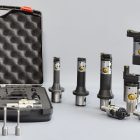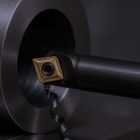
Selecting the right boring bar is essential for achieving precision and efficiency in internal machining operations. Even with advanced CNC machines and high-quality cutting inserts, performance depends on choosing the right boring bars tools that match the application. Bore diameter, depth, workpiece material, tolerance requirements, machine capability, and cutting conditions all influence tool selection. An incorrectly specified boring bar can lead to vibration, poor surface finish, reduced tool life, dimensional inaccuracies, and higher production costs. Understanding how boring bar specifications relate to specific machining requirements helps manufacturers improve machining stability, enhance productivity, extend tool life, and consistently achieve accurate, cost-effective results across a wide range of applications.
Why proper boring bar selection matters
Boring bars work to finish pre-existing holes, where working space is very limited, making them more susceptible to deflection ad vibration than other similar tools. This is why it is important to make the right boring bar selection to execute a stable machining procedure that can result in dimensional accuracy and superior surface finish quality. Choosing the correct combination of bar material, diameter, overhang, and insert geometry ensures that the tool can withstand machining forces while maintaining rigidity throughout the operation. It also allows manufacturers to optimize cutting parameters without compromising machining stability or precision. The right boring bar selection can also help with reduced vibration and chatter, thus resulting in longer insert and tool life, and higher productivity. A properly matched boring bar supports consistent production by minimizing machining errors and reducing the need for secondary finishing operations.
Understanding the primary specifications of a boring bar
Each boring bar is characterized by several essential specifications that dictate its application and usage, understanding which helps choose the perfect tool for the application.
- Shank diameter
Bars with larger diameters are better at resisting bending, which leads to more stable cutting performance. As a general rule, one should opt for the largest boring bar that can fit within the bore. A larger tool diameter enhances stiffness, minimizes vibration, and improves machining precision. Nonetheless, adequate clearance must always be ensured to facilitate proper chip removal and to avoid contact between the tool body and the workpiece.
- Overall length
The overall length of the boring bar dictates how deeply it can penetrate into the workpiece. While longer tools offer extended reach, they also compromise rigidity. An excessive length heightens the risk of tool deflection and chatter. Choosing a tool with just the necessary length helps to maintain improved stability during the machining process.
- Maximum overhang
Overhang is defined as the unsupported length of the boring bar that extends beyond the tool holder. Long overhangs considerably amplify bending under cutting forces, rendering machining more prone to vibration and dimensional inaccuracies. Whenever feasible, the overhang should be kept to a minimum while still allowing the tool to achieve the required machining depth.
- Insert compatibility
Various boring bars are engineered to fit specific insert shapes and sizes. The insert compatibility influences the cutting geometry, surface finish, cutting force, chip formation, and material removal capability. Choosing the right insert system guarantees that the boring bar operates effectively for the designated machining task and application.
Matching boring bar specifications to the machining application
Selecting the right boring bar involves matching its specifications with the machining application to achieve stable cutting, consistent accuracy, longer tool life, and reliable overall performance.
- Matching the boring bar to bore diameter
A boring bar that is too small lacks rigidity and may vibrate excessively, and a bar that is too large may interfere with the bore wall or restrict chip evacuation. This makes it important to make the right bar size choice. The ideal boring bar should maximize rigidity, while maintaining sufficient clearance for safe tool movement, efficient chip removal, stable machining, and coolant access. Proper sizing balances rigidity with operational flexibility.
- Considering bore depth
As the bore depth increases, the demands placed on the boring bar become greater. Deep boring operations often require extended tool reach, increasing the potential for deflection, chatter, tool wear, and poor surface finish. Manufacturers must thus consider larger diameter bars wherever possible, damped boring bars for vibration control, and optimized cutting parameters. Matching the boring bar to the bore depth is essential for maintaining machining stability.
- Matching the boring bar to the workpiece material
Different materials generate different cutting forces and machining conditions. For instance, steel generates moderate cutting forces and allows a wide range of boring bar options depending on machining requirements. Stainless steel is rigid and often generates higher cutting forces and continuous chips, while resisting vibration and maintaining stable chip formation. Cast iron is rigid too, but it typically produces short chips and can be abrasive. Aluminium, on the other hand, generates relatively low cutting forces, but requires excellent surface finish. The choice of material should be made based on the required level of rigidity and cutting performance.
- Evaluating required tolerances
Not all machining operations demand the same level of precision. General-purpose boring may allow relatively generous dimensional variation, while precision components require extremely tight tolerances. When tighter tolerances are required, greater attention must be paid to tool rigidity, machine stability, insert quality, clamping security, and cutting parameters. Applications involving precision bores typically benefit from premium boring bars designed for maximum dimensional consistency.
- Surface finish requirements
The required surface finish depends on how the finished component will be used. Parts for hydraulic systems, bearing housings, aerospace components, and other precision applications often need very smooth and accurate internal surfaces to function properly. Achieving a high-quality surface finish depends on several factors, including a stable boring bar, low vibration, the right cutting insert, suitable feed rates, and consistent cutting conditions. A boring bar that remains rigid and stable throughout the machining process helps produce smoother bore surfaces while reducing machining marks and improving overall part quality.
Matching the boring bar to machining conditions
Machining conditions significantly influence boring bar performance. Matching the boring bar to the machine, cutting parameters, chip control, and coolant requirements ensures stable, efficient, and accurate machining.
- Matching the boring bar to machine capability
The machine power, tool holding system, CNC accuracy, maximum spindle speed, and spindle rigidity all affect the boring bar selection. High-performance machining centres can often have more aggressive cutting conditions, while less rigid machines may require more conservative tooling choices. The boring bar should always complement the machine’s capabilities. Manufacturers can benefit from working with experienced tooling suppliers such as FineTech Toolings, who can recommend boring bars tools that complement specific machine capabilities and machining requirements.
- Considering cutting parameters
Cutting conditions have a direct influence on boring bar performance. For instance, higher cutting speeds can improve productivity, but also increase heat generation and vibration, if not properly controlled. Large depths of cut generate higher cutting forces, which is why selecting a rigid boring bar that can withstand such forces without deflection is important. The feed rate also influences the material removal, cutting force, and surface finish.
- Chip control considerations
Effective chip evacuation is essential during internal machining. Poor chip control can result in insert damage, tool breakage, scratched bore surfaces, interrupted cutting, and reduced productivity. Proper boring bar selection helps create sufficient clearance for chips, while allowing coolant to reach the cutting zone efficiently. Insert geometry also plays an important role in producing manageable chip shapes.
- Coolant delivery requirements
The coolant performs several important functions in the boring procedure, such as reducing cutting temperature, flushing chips from the bore, enhancing surface finish, and improving insert life. Certain boring bars incorporate internal coolant channels that deliver coolant directly to the cutting edge. These systems are particularly valuable in deep-hole machining where chip evacuation becomes more difficult.
Practical guidelines for selecting a boring bar
When evaluating boring bar specifications, manufacturers should consider the machining application as a complete system, rather than focusing on a single specification. A practical selection approach includes:
- Determining the bore diameter and selecting the largest boring bar
- Minimizing overhang wherever possible
- Matching the boring bar material to the machining conditions
- Choosing inserts appropriate for the workpiece material
- Considering required tolerances and surface finish
- Verifying compatibility with machine capabilities
- Evaluating chip evacuation requirements
- Optimizing cutting parameters
Following this systematic approach helps ensure the selected boring bar delivers reliable performance under actual production conditions.
Selecting the right boring bar involves much more than choosing one that fits the bore. Its diameter, length, overhang, material, insert compatibility, and suitability for the machine all influence machining stability and performance. Properly matched boring bars tools reduce vibration, improve bore accuracy and surface finish, extend tool life, and increase productivity. Considering factors such as workpiece material, bore dimensions, tolerance requirements, cutting parameters, and coolant conditions helps ensure optimal tool selection. Taking the time to match boring bar specifications to the application results in more reliable machining, lower production costs, consistent quality, and greater efficiency in the long run.