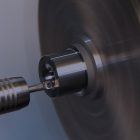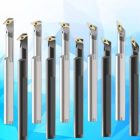
Achieving tight tolerances is a critical goal in precision machining. Meeting the standards of minimal dimensional variation, exceptional roundness, and excellent surface finish relies not only on the capabilities of the machine and cutting parameters, but also on the selection of an appropriate boring bar. Precision boring leaves very little room for error. Even minor tool deflection, vibration, or incorrect setup can lead to dimensional inaccuracies that surpass the specified tolerances. Therefore, it is crucial to select a boring bar that aligns with the machining application to maintain accuracy, minimize rework, prolong tool life, and guarantee consistent production quality. Let’s discuss the essential factors that must be taken into account when choosing a boring bar for applications that require tight tolerances.
Understanding tight tolerance machining
Tight tolerance machining refers to the process of manufacturing components with extremely precise dimensional accuracy, allowing only minimal deviation from the specified measurements. In such applications, even a slight variation can affect component fit, assembly, performance, or reliability. Achieving tight tolerances requires a combination of rigid tooling, stable machining conditions, appropriate cutting parameters, and high-precision equipment. Components requiring tight tolerances commonly include bearing housings, hydraulic cylinders, engine components, aerospace assemblies, medical devices, and precision moulds and dies. Manufacturing these components demands a boring system capable of maintaining dimensional stability throughout the machining process.
Why boring bar selection matters for tight tolerances
A boring bar operates inside the workpiece with limited support, making it susceptible to bending and vibration, which directly influences the accuracy of the internal bore. In the case of tight tolerances, it becomes crucial to make the right choice to attain the accurate bore diameter, better cylindricity and roundness, and improved surface finish. Selecting the right boring bar also helps reduce vibration, lower rejection rates, and increase insert life. A wrong choice, on the other hand, may lead to dimensional variation, taper, chatter marks, poor surface finish, and inconsistent production quality. Carefully evaluating the boring bar’s specifications against the machining requirements is therefore essential for achieving consistent precision and reliable machining performance.
Key factors to consider while making a boring bar choice
- Selecting the Appropriate Material
The material used to manufacture the boring bar significantly impacts its mechanical performance. For instance, steel is tough and reliable, but it is suitable for applications involving relatively short overhangs, as it becomes less stable during long-reach precision boring. carbide, on the other hand, offers better performance with longer overhangs and tight tolerances, with improved dimensional control and lower deflection. For difficult machining conditions, damped boring bars provide additional vibration control as they reduce chatter and improve stability during deep or extended boring operations.
- Considering the Workpiece Material
Different workpiece materials generate different cutting forces, ultimately affecting the boring bar performance. For instance, steel can be machined with steel or carbide boring bars, while stainless steel generates higher cutting forces and continuous chips, calling for rigid boring bars capable of minimizing vibration. Cast iron is abrasive, but generally produces discontinuous chips, making stable tooling essential to maintain dimensional accuracy. Aluminium produces relatively low cutting forces, which makes maintaining stability essential for achieving high-quality surface finishes. Matching the boring bar to the workpiece material improves machining consistency and tool life.
- Matching the Boring Bar to Bore Dimensions
Choosing a boring bar that is too small reduces rigidity, while one that is too large may interfere with the bore wall or restrict chip evacuation. The ideal boring bar is thus one that offers maximum possible rigidity, stable cutting conditions, safe operating clearance, and adequate chip clearance. Proper matching of the tool to the bore dimensions improves both accuracy and machining efficiency.
- Prioritizing maximum tool rigidity
A rigid boring bar resists bending under cutting forces, helping maintain the cutting edge in its intended position throughout the machining operation. This results in reduced deflection, better dimensional accuracy, and better surface finish. Increasing tool rigidity significantly improves machining stability.
- Minimizing tool overhang
A long tool overhang increases the likelihood of tool deflection, dimensional accuracies, and deterioration of surface finish quality. Keeping the overhang as short as possible is thus wise to improve the rigidity of the entire tooling system. However, if long reach is unavoidable, boring bars specifically designed for extended overhang applications should be used.
- Choosing the Right Insert and Insert Geometry
The insert used with the boring bar significantly affects machining accuracy, with important considerations including the insert geometry and the insert grade. Positive cutting geometries generally reduce cutting forces, helping improve machining stability. The insert grade should match the workpiece material and machining conditions. A proper grade improves cutting consistency, insert condition, wear resistance and tool life. Worn or damaged inserts can introduce dimensional variation.
- Considering cutting parameters
Balancing cutting parameters with tool rigidity is essential for achieving precision machining. Proper cutting speed helps maintain efficient material removal while minimizing excessive heat generation. Similarly, controlled feed rates are preferred during finishing operations to achieve close tolerances and superior surface finish. The depth of cut also requires careful consideration, as larger cuts generate higher cutting forces that increase the risk of tool deflection. Therefore, finishing passes are typically performed with lighter depths of cut to enhance dimensional accuracy and machining stability.
- Ensuring Secure Tool Holding and Machine Stability
A rigid machining system is essential for achieving consistent repeatability and maintaining bore accuracy, especially in tight-tolerance applications. This begins with secure tool holding that prevents unwanted movement during machining. Proper spindle condition, a stable machine setup, accurate tool alignment, and minimal runout further contribute to maintaining dimensional precision. Together, these factors create a stable machining environment that reduces vibration, enhances cutting performance, and ensures reliable, repeatable results throughout the production process.
- Focusing on Chip Evacuation
Poor chip control may result in insert damage, dimensional inaccuracies, interrupted cutting, and scratched bore surfaces. Selecting a boring bar that provides adequate chip clearance and supports efficient coolant flow helps maintain stable machining conditions. Where appropriate, internal coolant delivery systems can further improve chip evacuation and extend tool life.
- Considering surface finish requirements
Many precision applications require both tight dimensional tolerances and excellent surface finish. The surface finish quality depends on several factors working together, including tool rigidity, insert condition, stable cutting parameters, proper feed rate, and effective vibration control. Selecting a boring bar capable of minimizing vibration contributes directly to smoother bore surfaces and reduced post-machining finishing requirements.
Choosing a boring bar for applications with tight tolerances necessitates a thorough assessment of the entire machining system instead of focusing only on one tool specification. An appropriately chosen boring bar reduces deflection and vibration, allowing manufacturers to achieve exact bore dimensions, excellent surface finishes, and consistent production quality. By understanding all the factors that affect machining performance, one can make educated tooling choices that minimize rework, prolong tool life, and enhance overall manufacturing efficiency. In precision machining, where even minor deviations can influence component performance, investing in the correct boring bar is crucial for delivering dependable, high-quality outcomes. FineTech Toolings, one of the leading boring bar manufacturers in India, provides precision-engineered boring solutions designed to meet demanding machining requirements with accuracy and reliability.