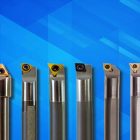
In precision machining, achieving tight tolerances and quality surface finishes is not dependent only on machine capability, but also on the tooling used, especially the boring head. Selecting the right boring head is a critical decision that directly impacts dimensional accuracy, process stability, productivity, and overall manufacturing cost. Making the right choice brings on efficient machining and high-quality output; while one wrong decision can lead to vibration, deflection, and inconsistent results. It is thus absolutely crucial to make the right choice, and given the growing demand for micron-level tolerances across industries, understanding the key factors involved in selecting a boring head is essential for machining engineers, production managers, and decision-makers alike.
Understanding the application requirements
The first step in selecting a boring head is to understand the application requirements, especially tolerance levels. Precision applications often demand extremely tight dimensional control, and not all boring heads are designed to meet such requirements. For high-accuracy machining, the tool must offer fine adjustment capability, minimal runout, and high repeatability. Ignoring tolerance needs can lead to frequent adjustments and inconsistent results. Bore diameter and depth are also critical. Larger diameters require higher rigidity, while deeper bores increase deflection risk. Maintaining stability over long overhangs and aligning with cutting parameters is essential to ensure accuracy and achieve a consistent surface finish.
Rigidity and structural stability
Rigidity is another crucial factor. A rigid tool can resist bending under cutting forces, ensuring that the cutting edge maintains its intended path. High rigidity tools can improve dimensional accuracy and bring better control over bore geometry, while reducing deflection. However, achieving the balance between rigidity and flexibility is essential to manage dynamic forces during machining. An overly rigid tool can lead to vibration issues. A boring head design is good when it incorporates structural features that minimize chatter, while maintaining stability. This balance is essential for achieving both accuracy and surface finish.
Adjustment mechanism and precision control
Precision boring requires the ability to make extremely small and controlled adjustments. High-quality boring heads offer fine-pitch adjustment mechanisms that allow for micron-level corrections. This helps with accurate sizing and achieving target dimensions. Backlash in the adjustment mechanism can lead to inconsistent positioning, which affects accuracy. Reliable boring heads are designed to minimize or eliminate backlash, ensuring that adjustments are precise and repeatable. Repeatability is especially important in batch production, where consistency across multiple components is critical.
Insert clamping and stability
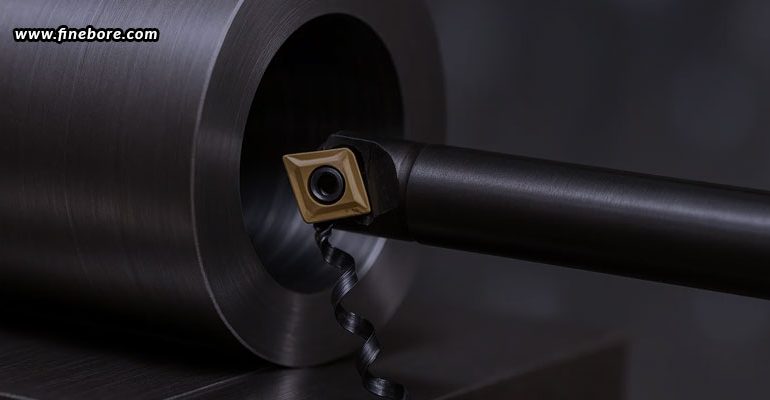
How securely the cutting insert is held is also of prime importance. That is because poor clamping can lead to micro-movements during cutting, causing vibration and dimensional errors. A robust clamping system ensures stable cutting conditions, which means reduced vibration and thus, consistent performance. Also, the selected boring head should be compatible with the appropriate inserts for the job, as different applications require different insert geometries and materials. Additionally, a secure and precise clamping mechanism helps maintain optimal cutting-edge positioning, reducing wear and improving tool life. This ultimately contributes to better surface finish and reliable machining outcomes.
Material and build quality
The material of the boring head affects its strength, durability, and vibration characteristics. The quality of the material decides on the tool’s resistance to deformation and ability to dampen vibrations, affecting the performance and reliability of the tool. High-quality tools are typically made from advanced alloys that provide a combination of rigidity and toughness. Also, it is important to consider precision-ground components, tight tolerances in assembly, and high-quality finishes. Poorly manufactured tools can introduce runout and instability, undermining machining accuracy. This is why leading names among the top boring head manufacturers in India, such as FineTech Toolings, prioritize material quality, precision manufacturing, and tight assembly tolerances.
Compatibility with machine and setup
Any instability between the boring head and machine spindle can negatively affect the performance. The boring head must thus be compatible with the spindle type, and the quality of the tool holder should be acceptable with easy installation and alignment. The boring head must also allow for a compact setup that can improve stability and accuracy. Excessive overhang can bring about deflection and vibration. However, where longer reach is unavoidable, the tool must be designed to handle increased leverage without compromising performance.
Cutting conditions and application environment
Different materials respond differently to cutting forces. Hard materials generate higher resistance, while softer materials may cause built-up edge or instability. The boring head must be capable of maintaining stability across varying material conditions. Tools that are not suited to the required speeds or loads may experience excessive wear, vibration, or failure. It is therefore important to match the tool design, insert grade, and cutting parameters with the workpiece material. Proper selection helps ensure consistent performance, extended tool life, and improved surface finish across diverse machining applications.
Surface finish requirements
Surface finish directly affects performance. A stable and well-designed boring head helps achieve smoother finishes by minimizing vibration and ensuring consistent cutting action. Poor surface finish can lead to increased friction, wear, and reduced component life, especially in high-precision applications. Factors like tool rigidity, insert geometry, cutting speed, and feed rate all influence the final surface finish. By selecting the right boring head and optimizing machining parameters, manufacturers can achieve superior surface finish quality, enhance functional performance, and reduce the need for additional finishing operations.
Productivity and process efficiency
Setup time, first-pass accuracy, tool life, and maintenance collectively define the efficiency and reliability of the machining process. Tools with precise adjustment mechanisms reduce the need for trial cuts and manual corrections, which improves setup efficiency and overall productivity. Also, a high-quality boring head can help achieve the desired dimensions in the first attempt itself, which reduces rework, scrap, and production delays. High-quality durable tools also experience less wear and require less frequent replacement, which reduces downtime and lowers long-term operational costs.
Consistency and repeatability in production
In high-volume manufacturing, batch-to-batch consistency and reliability is crucial. A good-quality boring head ensures that each part meets the same quality standards, regardless of production batch or operator. Advanced tooling reduces reliance on operator skill by providing predictable and repeatable performance, which is particularly valuable in automated or multi-shift production environments. Consistency in machining also helps reduce rejection rates and minimizes variations in component quality. This leads to improved process control, better production planning, and enhanced overall efficiency, enabling manufacturers to meet tight deadlines while maintaining high standards.
Choosing the right boring head is a crucial investment in machining efficiency and performance. A properly selected tool guarantees stable machining conditions, exceptional dimensional accuracy, and an excellent surface finish, which in turn minimizes rework and lowers operational expenses. By thoroughly assessing factors like rigidity, adjustment accuracy, clamping stability, material quality, and specific application requirements, manufacturers can significantly improve their machining results. In an industry where tolerances are tightening and expectations are rising, it is important to select the right boring head, which can help deliver precision, consistency, and reliability in every component manufactured.