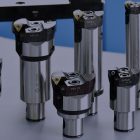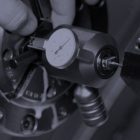

In precision machining, the boring process is highly sensitive, where even minor instabilities can result in dimensional inaccuracies, subpar surface finishes, or early tool failure. Although cutting tools and inserts often receive significant focus, one essential element is frequently overlooked – the tool holder. In boring tasks, the tool holder serves not just as a link between the machine spindle and the boring bar; it is a vital factor in ensuring rigidity, accuracy, and vibration management. This blog delves into the crucial role that tool holders have in maintaining boring precision, the issues stemming from inadequate tool holding, and how choosing the right tool holder can enhance machining results across various industries.
Understanding the role of tool holders in boring
A tool holder is essential in boring processes, as it firmly secures the tool and conveys spindle motion with optimal stability, precision, and minimal runout or vibration.
Key impacts of inaccurate tool holding
- Loss of concentricity
- Increased vibration and chatter
- Reduced tool lifespan
- Inconsistent bore sizes
- Poor surface finish
In boring operations, the accuracy of machining is heavily reliant on the rigidity and precision of the tool holder, since even top-quality boring tools cannot offset the effects of inadequate clamping stability or excessive runout.
Why boring operations are particularly vulnerable to tool holding
Boring tools are notably susceptible to instability because of their elongated, slender design, where bending forces escalate with the depth of the bore, and even slight setup inaccuracies can greatly impact machining precision.
Key sensitivities in boring
- Internal cutting forces exert pressure away from the spindle’s centreline.
- Limited support within the bore heightens the risk of deflection.
- Increased depth-to-diameter ratios exacerbate minor runout issues.
- Chatter can be challenging to identify until surface damage becomes evident.
In these demanding internal machining environments, the tool holder acts as the main stabilizing component, reducing deflection and vibration to safeguard accuracy, surface finish, and the overall quality of the bore.
Common problems caused by poor tool holders
Improper tool handling has a direct impact on the accuracy of boring and the stability of the process, leading to various performance challenges that undermine dimensional control, surface quality, and overall machining efficiency.
- Excessive runout
Runout happens when the rotational axis of the tool is not perfectly aligned with the spindle axis. Even minor runout, measured in microns, can create uneven cutting forces on the boring bar, resulting in tapered bores, inconsistent material removal, increased vibration, and a noticeably poor surface finish, particularly in precision internal machining tasks.
- Tool slippage
A lack of sufficient clamping force permits the boring bar to shift or move during cutting, especially under higher cutting loads or when boring deeper holes. This movement results in dimensional drift, a loss of repeatability, unpredictable bore sizes, and the need for frequent rework, complicating the maintenance of tight tolerances across various components.
- Increased vibration and chatter
Tool holders that lack rigidity or are poorly balanced transmit vibrations directly to the cutting edge rather than absorbing them. This situation accelerates the formation of chatter, destabilizes the cutting process, compromises surface integrity, increases noise levels, and often compels operators to lower cutting parameters, which adversely affects productivity and cycle times.
- Reduced tool life
Unstable tool holding leads to uneven load distribution on the cutting insert, causing irregular wear patterns, micro-chipping, and excessive thermal stress. Over time, this results in premature insert failure, increased tooling costs, frequent tool changes, and diminished overall machining efficiency in boring operations.
Effective tool holding is crucial in boring operations, as precision, rigidity, and vibration control significantly affect accuracy, surface finish, tool longevity, and long-term reliability in machining.
The role of tool holders in boring performance
Tool holders are crucial for enhancing boring performance as they manage accuracy, stability, and repeatability. Their impact encompasses vibration control, precision, tool longevity, and overall machining efficiency.
- Accuracy
A premium tool holder significantly boosts boring performance by ensuring concentricity between the spindle and tool, reducing deflection under cutting loads, and minimizing vibration and chatter. These elements facilitate consistent and repeatable machining, leading to improved surface finish and dimensional accuracy. The overall result is enhanced precision, extended tool life, and increased process reliability.
- Precision
Unbalanced tool holders create centrifugal forces that exacerbate vibration, especially at elevated spindle speeds. Precision-balanced holders maintain stability and accuracy throughout the machining process. Best practices involve utilizing properly balanced holders, ensuring cleanliness of spindle and taper interfaces, avoiding damaged or worn holders, and aligning the holder’s balance grade with operating speeds for dependable high-speed boring.
- Vibration management
Rigidity is a critical factor affecting boring accuracy. A robust tool holder withstands bending and absorbs cutting forces, preventing them from translating into vibration at the cutting edge. This minimizes chatter in deep bores, stabilizes cutting forces, enhances surface finish, and enables higher material removal rates. When used with dampened boring bars, rigid holders significantly broaden the stable machining range.
- Runout control
Runout has a direct effect on bore dimensions, roundness, and surface finish. In boring processes, even slight runout can greatly elevate cutting forces on one side of the bore, leading to increased wear and diminished accuracy. High-precision tool holding systems, such as hydraulic and shrink-fit holders, generally maintain runout levels below three microns, making them perfect for tight-tolerance internal machining.
- Tool longevity and cost efficiency
While premium tool holders require a higher upfront cost, they ultimately lower overall machining expenses over time. By prolonging the life of tools and inserts, reducing scrap and rework, minimizing machine downtime, and enhancing process consistency, high-quality holders provide a significant return on investment through increased reliability, productivity, and long-term performance.
For manufacturers looking for high-precision boring tools in Bangalore, FineTech Toolings offers engineered boring solutions that emphasize rigidity, runout control, and vibration stability. Their tooling systems are crafted to facilitate precise internal machining, extended tool life, and reliable performance in challenging production settings.
Tool holders are more crucial to boring accuracy than many machinists may think. They have a direct impact on rigidity, runout, vibration management, and tool longevity – elements that determine the success or failure of boring operations. By investing in high-quality tool holders, choosing the appropriate holding system for each task, and ensuring proper maintenance, manufacturers can achieve consistently precise bores, exceptional surface finishes, and enhanced productivity. In precision machining, the tool holder is not merely a supporting element; it is a fundamental aspect of boring accuracy.