Precision in today’s manufacturing landscape is no longer a competitive advantage; rather, it’s a basic requirement. And, as industries are constantly moving towards miniaturization and zero-defect production, machining processes are required to consistently achieve dimensional accuracy, which is now measured more in microns than millimetres. This has made micro boring an essential element in today’s manufacturing environment for producing high-precision internal diameters below 10 mm with exceptional consistency. Micro-boring controls the geometry, concentricity, and surface finish at extremely small scales, making it indispensable in critical industries like aerospace, automotives, electronics, medical devices, and precision hydraulics.
What is micro boring?
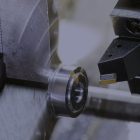
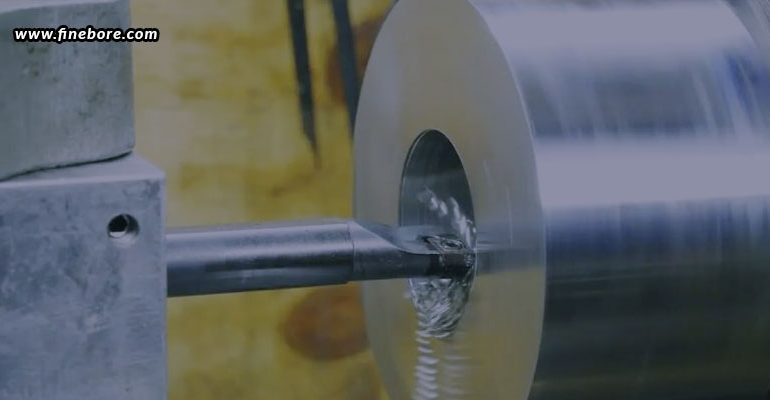
Micro boring is a precision machining process that is used to enlarge and finish, or even correct pre-existing holes that are typically below 10 mm in diameter. Micro boring becomes essential in scenarios where tool rigidity, vibration control, and thermal stability become exponentially critical. At such tiny diameters, even minimal tool deflection, material inconsistencies, and spindle runout can result in dimensional deviation or poor surface integrity, which is why micro boring tools are engineered with ultra-slender geometries, optimized insert sizes, and advanced material that can help maintain stability under even the most challenging cutting conditions. In such applications, a well-engineered micro boring kit plays a crucial role in maintaining process stability, such as the one offered by FineTech Toolings, which supports consistent rigidity, controlled cutting, and reliable micron-level accuracy across ultra-precision machining operations.
Core principles of micro boring
Micro boring is governed by the need for extreme control and stability, where every aspect of cutting is carefully managed to achieve precise, repeatable results at micron-level tolerances.
- Single-point cutting
Micro boring relies on a single-point cutting edge, which enables precise material removal and diameter correction, allowing engineers to adjust the hole size in controlled increments, correct alignment and straightness issues, and maintain consistent geometry across production batches. This principle is particularly critical in ultra-precision manufacturing, where even minor deviations can affect component functionality. Achieving tolerances within ±5 to ±10 microns requires careful attention to tool condition, setup, and consistent cutting practices to ensure reliable results over multiple production cycles.
- Controlled cutting parameters
In micro boring, speeds, feeds, and depths of cut must be precisely controlled to avoid tool vibration, thermal distortion, and built-up edge formation. Repeated accuracy is prioritized over high material removal rates, focusing on stability over speed. By maintaining consistent cutting conditions, manufacturers can achieve uniform hole quality, excellent surface finish, and dimensional precision with micro boring tools. this helps extend tool life and minimizes the risk of errors during high-volume production, ensuring consistent performance across every machined component.
- Rigidity
In micro boring, tool rigidity is prioritized over material removal rate. Slender boring bars are prone to deflection, so the tool design of micro boring tools focuses on optimized shank lengths, high stiffness-to-diameter ratios, and precision-ground interfaces. Cutting parameters are kept moderate and carefully controlled so that the tool cuts smoothly without vibration, preventing chatter, reducing tool wear, and ensuring longer tool life, while maintaining high accuracy. Rigidity is essential to achieving the micron-level tolerances demanded in ultra-precision applications.
- Thermal and vibration management
In micro boring, even small temperature fluctuations or machine vibrations can impact final dimensions and surface finish. Successful micro boring depends on stable machine platforms, balanced tooling, and effective coolant delivery to maintain thermal balance. Managing vibrations and heat ensures consistent cutting, reduces the risk of dimensional errors, and prolongs tool life. Together, these measures create a controlled machining environment that allows manufacturers to achieve repeated precision and maintain tight tolerances across long production cycles.
Why micro boring is essential for ultra-precision manufacturing
Micro boring delivers highly accurate and repeatable internal geometries that directly influence performance, reliability, and quality in advanced engineered components, making the process absolutely essential in ultra-precision manufacturing.
- Miniaturization of components
As products become smaller and more complex, the internal features are required to be machined with exceptional accuracy. Micro boring allows manufacturers to achieve highly accurate internal diameters in compact components where even minimal deviation can compromise functionality. By controlling geometry, roundness, and surface finish at micron-level tolerances, micro boring ensures that miniature parts perform reliably, a feature that is particularly crucial in industries where small-scale features are critical to overall product performance.
- Functional performance requirements
In applications like fuel injection systems, hydraulic valves, and medical implants, internal bore accuracy directly impacts the fluid flow, sealing efficiency, wear resistance, and the component lifespan. Micro boring ensures that these performance parameters are consistently met by enabling precise control over hole dimensions, alignment, and surface finish. Maintaining this level of precision helps components operate efficiently even under demanding conditions, while reducing maintenance needs, and enhancing the reliability of systems in high-performance engineering applications.
- Assembly integrity and repeatability
Ultra-precision manufacturing requires components to assemble flawlessly without manual correction. Micro boring helps here by supporting precise alignment of mating parts, accurate interference fits, reduced rejection rates, and consistent dimensional tolerances across production batches – all of which is particularly critical in high-volume production environments. This repeatability not only improves assembly efficiency, but also ensures that each component meets the intended design requirements reliably, contributing to overall product quality.
- Compliance with global quality standards
Industries like aerospace, medical manufacturing, and others that are governed by strict regulatory and quality frameworks, require processes that deliver exceptional precision. Micro boring provides a controllable and predictable machining process that aligns well with these requirements, ensuring components meet global standards for accuracy, reliability, and performance. By enabling consistent adherence to specifications, micro boring helps manufacturers achieve regulatory compliance, maintain high-quality outputs, and reinforce customer confidence in critical applications where tolerance and precision are non-negotiable.
Applications driving the demand for micro boring
Micro boring is widely used in a variety of applications and industries, supporting both functional reliability and manufacturing efficiency.
- Aerospace components, such as actuator housings and fuel systems, use micro boring to achieve accurate internal diameters and reliable operation under extreme conditions.
- Medical devices, including implants and surgical instruments, rely on micro boring for tight tolerances, smooth finishes, and consistent quality.
- Automotive systems, such as injectors, valve bodies, and transmission parts, depend on precise bores for proper fluid control, sealing, and durability.
- Electronics and precision instruments require micro boring to produce miniature housings with exact internal geometry and repeatable accuracy.
The strategic role of micro boring in modern machining
Micro boring is a strategic capability that enables manufacturers to meet the evolving demands of precision engineering. As tolerances tighten and component geometries become more complex, reliance on corrective, high-accuracy internal machining will only increase in the future. Manufacturers that invest in advanced micro boring tools, optimized setups, and skilled process planning position themselves to deliver high-quality components, greater consistency across production batches, and lower ejection rates. In an era where microns define success or failure, micro boring stands as a cornerstone of ultra-precision manufacturing.
Micro boring plays a vital role in meeting the ever-increasing precision demands of modern manufacturing. By enabling accurate control over internal diameters, geometry, and surface finish at micron levels, it supports the production of high-performance components across critical industries. As products continue to shrink in size, micro boring provides manufacturers with a reliable method to achieve reliable, consistent, and zero-defect results. Its ability to manage tight tolerances, ensure assembly integrity, and comply with global quality standards makes micro boring not just a machining process, but a strategic necessity in ultra-precision manufacturing environments!