Precision and productivity frequently exist at opposing ends of the spectrum in the machining industry. On one hand, achieving micron-level accuracy guarantees that components adhere to stringent tolerances, which is essential for safe and dependable performance in sectors such as aerospace, medical, and automotive. And, on the other, manufacturers are compelled to fulfil production targets and reduce costs to maintain competitiveness.
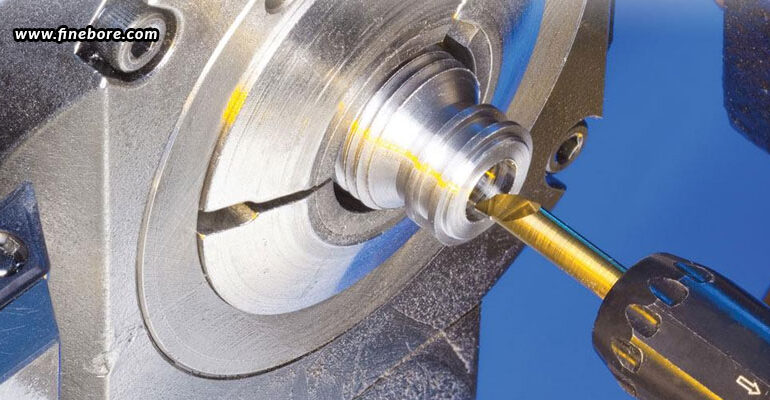
Boring operations, which entail enlarging or finishing pre-drilled holes to exact tolerances, lie at the core of this challenge. If you operate too quickly, you risk chatter, subpar surface finish, and waste. If you go too slowly, your production rate declines sharply, threatening profitability. This blog delves into how machinists and workshops can achieve an ideal balance between precision and productivity, showcasing contemporary tooling innovations, process strategies, and practical solutions to enhance both without compromise.
Understanding the fight between precision and productivity
Precision necessitates meticulous operations with stringent process control, whereas productivity calls for quicker cycle times and increased material removal rates. In boring operations, the difficulty escalates due to the following reasons.
- Bores frequently determine the functional accuracy of a component; any deviation can impact assembly or performance.
- Deeper bores heighten the risks of tool deflection, chatter, and heat accumulation, which are exacerbated at higher speeds.
- Material properties like hardness and toughness influence cutting parameters, often necessitating slower feeds to maintain accuracy.
This dilemma is particularly evident in industries with strict tolerances, such as in aerospace, automotive, and medical industries. Achieving a balance between precision and productivity is no longer a choice; it is a necessity.
Factors that affect precision
Achieving high precision in boring operations is the result of multiple interconnected factors. From tool rigidity to machine capability and cutting conditions, every element influences the final bore quality. Understanding these factors is crucial for minimizing errors, improving surface finish, and ensuring consistent machining performance.
- Tool rigidity and design
The rigidity of a boring bar has a direct impact on accuracy. Extended overhangs heighten the likelihood of tool deflection, resulting in tapered bores or subpar finishes. Anti-vibration boring bars and tuned-mass damping designs greatly improve stability for deep bores.
- Machine tool capability
No matter how advanced a boring bar may be, it will not perform optimally if the spindle or slides lack rigidity. Issues such as thermal drift, backlash, or inadequate workholding can create deviations that exceed the tool’s own specifications.
- Cutting parameters
Lower feed rates and moderate speeds enhance accuracy but can reduce productivity. Abrupt changes in depth of cut or speed may result in chatter and surface imperfections.
- Workpiece material
Challenging materials to machine, such as titanium or Inconel, exacerbate precision difficulties. Their resistance to cutting generates more heat and accelerates tool wear, necessitating more cautious cutting conditions.
Mastering precision in boring requires a careful balance of tooling, machine performance, and material-specific strategies. By addressing each influencing factor, machinists can reduce variability, extend tool life, and achieve repeatable, high-quality results. This holistic approach forms the foundation for efficient, accurate, and industry-compliant boring operations in modern manufacturing environments.
Factors that affect productivity
Productivity in boring operations is measured not only by cycle time but also by how efficiently tools and machines are utilized. Factors like cutting speed, chip management, and setup optimization significantly impact output. Understanding these productivity drivers helps workshops maximize throughput while maintaining acceptable quality and minimizing tool-related downtime.
- Increased speeds and feeds
Pushing tools at higher speeds and feeds drastically reduces machining time. However, it also raises the risk of dimensional errors, chatter, and poor surface finish, requiring a careful balance between speed and stability.
- Enhanced tooling for chip removal
Efficient chip evacuation allows faster feeds without damaging tools or workpieces. Coolant-through boring bars, air-blast systems, and optimized flute designs help prevent chip packing, improving tool life and bore quality simultaneously.
- Versatile and modular tooling
Modern modular boring heads combine roughing and finishing in a single setup. Quick insert changes minimize machine downtime, helping shops complete more parts per shift without sacrificing bore accuracy or surface finish.
- Automation and setup optimization
Reducing manual intervention boosts productivity significantly. Quick-change toolholders, in-machine probing, and minimal part handling streamline workflows, saving time while maintaining consistent, repeatable results in both small-batch and high-volume production environments.
Maximizing productivity requires more than simply running machines faster. Integrating advanced chip evacuation, modular tooling, and automation ensures consistent output with fewer interruptions. By optimizing every step of the process, workshops can achieve faster cycle times, extended tool life, and higher profitability without compromising machining quality.
Modern tools that help achieve both precision and productivity
Recent advancements in tooling and machining techniques now enable workshops to achieve exceptional precision without significantly compromising productivity.
- High-Frequency Vibration-Assisted Boring Bars (HFVABB)
These state-of-the-art boring bars utilize controlled micro-vibrations to minimize cutting forces and enhance chip removal. They facilitate quicker feeds with diminished chatter, resulting in superior surface finishes and reduced tool wear, even when working with titanium or stainless steel.
- Anti-vibration and composite boring bars
Modern boring bars incorporate tuned-mass dampers or carbon-fibre reinforced shafts to mitigate chatter. This enables machinists to safely increase speeds without sacrificing bore precision.
- Modular and fine-adjustable systems
Boring heads equipped with micron-level adjustment screws allow machinists to achieve precise bore dimensions after roughing, thereby minimizing scrap and enhancing repeatability without the need to remove the tool from the spindle.
- Smart tooling and real-time monitoring
Sensor-equipped boring bars are becoming integral to Industry 4.0 machining. They track vibration, load, and tool wear in real time, facilitating predictive adjustments that maintain part tolerances while preventing downtime.
How to achieve both precision and productivity?
Even with advanced boring bars, productivity and precision rely heavily on disciplined process management. Strategic operational techniques allow machinists to maximize output while maintaining exacting tolerances. By optimizing each step, workshops can consistently deliver quality bores without excessive trial-and-error or unnecessary downtime.
- Segmented boring operations
Begin with roughing passes at higher feed rates to quickly remove material. Follow with slower finishing passes to achieve tight tolerances and smoother surfaces, balancing productivity with the precision required for critical applications.
- Optimized tool overhang
Keeping boring bars as short as practical minimizes vibration and tool deflection. This simple adjustment enhances cutting stability, enabling higher feed rates without compromising bore quality or overall machining safety.
- High-pressure coolant
Applying high-pressure coolant or air blast effectively removes chips and controls heat in deep bores. Improved chip evacuation allows faster feed rates, extends tool life, and prevents bore surface damage.
- In-machine measurement
Using bore gauges or in-spindle probes enables instant dimensional verification during machining. This proactive approach reduces rework, prevents scrapped parts, and maintains process consistency without stopping production for manual checks.
A well-structured boring process transforms advanced tooling into tangible results. By combining segmented passes, minimized overhang, efficient chip management, and real-time measurement, workshops achieve a seamless balance of speed and accuracy, meeting modern manufacturing demands confidently while maximizing tool performance and overall operational efficiency.
Finetech Toolings – Your partner for precision and productivity
Achieving a balance between productivity and precision necessitates top-tier tooling. Finetech Toolings, recognized as a reliable manufacturer of precision boring bars in Bangalore, enables workshops to attain this balance through:
- Anti-vibration and HFVABB designs that ensure chatter-free, high-speed boring
- Modular and finely adjustable boring heads that provide micron-level accuracy
- Coolant-through and chip-optimized tooling designed to preserve surface integrity at elevated feeds
- Application engineering support aimed at optimizing cutting strategies for enhanced speed and precision
Whether dealing with automotive engine blocks, aerospace components, or machining medical devices, Finetech Toolings serves as the ideal link between precision and productivity.
By integrating modern tooling innovations, disciplined process planning, and advanced real-time monitoring, workshops of any size can achieve the dual goals of higher throughput and uncompromising accuracy. Success lies in selecting the right boring bars, optimizing machining parameters, and maintaining process consistency. With tools like anti-vibration designs, modular heads, and coolant-through technology, even smaller workshops can compete with industry leaders. Partnering with experienced precision boring bar manufacturers ensures access to the latest innovations and expert guidance, enabling manufacturers to confidently embrace the future of efficient, high-precision boring while maximizing productivity, quality, and long-term profitability.