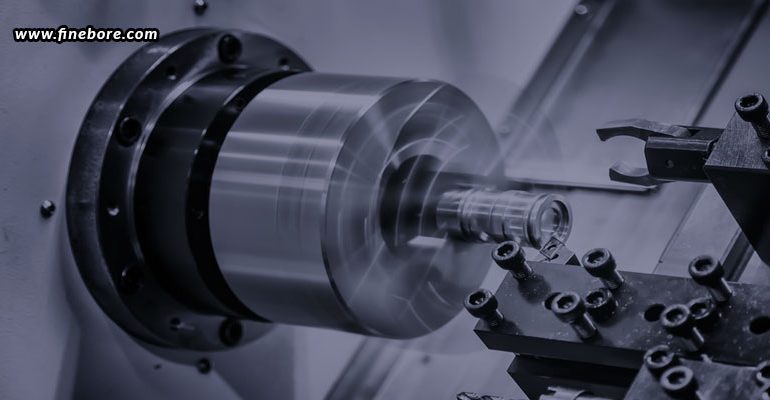
As manufacturing tolerances shrink from millimetres to hundredths of a millimetre, and down to single-digit microns, precision is no longer just a quality metric; it’s the line between performance and failure. And this shift is forcing manufacturers to rethink how machining accuracy is achieved. Among the many tools in modern manufacturing, the boring head has emerged as a critical precision tool. With the rise of micron-level adjustments, boring heads are now central to achieving perfect geometric accuracy, superior surface integrity, and process reliability. Let’s explore how micron-level precision is reshaping manufacturing processes today.
The rise of micron-level machining
Today’s manufacturing processes often demand dimensional control within ±2 to ±10 microns, particularly in aerospace structural components, hydraulic and fuel system housings, EV motor and gearbox bores, bearing seats and precision fits, and medical device components. The challenge goes beyond achieving the correct diameter; it also involves maintaining precise roundness, tight positional tolerances, minimal cylindricity error, and superior surface finish. Traditional machining approaches often struggle to maintain this level of consistency across production batches. Thermal variation, tool deflection, and machine dynamics further complicate the ability to hold such tight tolerances reliably. This is where precision boring operations become essential, enabling controlled, repeatable adjustments that directly influence final geometry and functional performance.
Why precision boring operations define final accuracy
Drilling creates a hole, while boring perfects it to the right dimensions and finish. Even high-quality drilling can result in tool deflection, slight misalignment, material inconsistency, and surface irregularities. Boring corrects these imperfections and determines the final geometry of the hole, making it the last opportunity to achieve dimensional perfection. But today, the requirement is for advanced boring heads with micron adjustment capabilities. Earlier, boring heads relied on manual dial adjustments with limited resolution. Modern precision boring heads allow radial adjustments as fine as 1 micron, repeatable settings without trial cuts, stable positioning under cutting forces, and predictable compensation for wear and heat. This level of control transforms boring into a highly controlled precision process capable of consistently achieving tight tolerances across production runs.
How micron adjustability is changing machining outcomes
Micron-level adjustability is redefining machining performance, enabling manufacturers to achieve exceptional dimensional accuracy, superior geometry, improved surface finishes, and stable process control – all essential for meeting today’s ultra-tight tolerance requirements.
- Dimensional accuracy without iteration: Earlier, manufacturers relied on trial cuts, re-adjustment, and re-cutting. But now, engineers use micron-adjustable boring heads to dial in near-final dimensions before cutting, dramatically reducing scrap and setup time. The outcome is faster setups, stable process capability, and fewer rejected parts.
- Superior geometric control: High-precision boring heads ensure balanced cutting forces, minimal vibration, and low runout, which lead to better geometry in terms of roundness, straightness, and cylindricity. These factors are particularly critical in applications like bearing seats and sealing surfaces, where even minor deviations can cause performance loss.
- Surface finish enhancement: Micron control allows for lighter and more controlled finishing passes, promoting uniform chip formation and reduced chatter, which results in lower surface roughness, improved wear resistance, and reduced friction.
- Process stability over long production runs: Micron-adjustable boring heads maintain consistent performance owing to their robust construction, precise locking systems, and thermal stability, which prevent dimensional drift during extended machining cycles – a common issue in high-speed production.
Design engineering that powers modern precision boring heads
Precision boring heads combine advanced mechanical design with fine adjustment systems, rigid construction, dynamic balance, and vibration control technologies – all working together to deliver the stability and accuracy required for micron-level machining.
- Micro-adjustment mechanisms: Fine-pitch screws, calibrated scales, or digital readout systems allow exact radial positioning, minimizing backlash and ensuring that every adjustment translates into actual tool movement. These mechanisms provide machinists with repeatable, micron-level control, enabling precise corrections without additional trial cuts, and are critical for achieving consistent hole geometry and tight tolerances in high-precision applications.
- High rigidity structures: Boring heads, with their compact designs, high-strength materials, and optimized mass distribution, resist deflection, reducing bending and vibration under cutting loads. This rigidity ensures that tool stability is maintained under heavy cutting forces, preserving dimensional accuracy and surface integrity even during high-speed or long production runs, making them essential in high-tolerance manufacturing.
- Dynamic balancing: At higher spindle speeds, imbalance causes vibration and poor finish. Balanced boring heads enable greater accuracy, smoother rotation, and reduced spindle stress at high speeds. Proper dynamic balancing minimizes runout, protects spindle bearings, improves cutting performance, and ensures consistent surface finishes across all production cycles.
- Advanced damping properties: Some boring head designs integrate damping materials or structures to absorb vibration energy, further improving surface finish and tool life. By controlling micro-vibrations, these damping features reduce chatter, extend tool life, enhance dimensional repeatability, and allow precision machining even under challenging cutting conditions.
Benefits and challenges of precision boring
Precision boring brings about accurate dimensions and better surface finishes, along with other operational benefits like reduced scrap rates, fewer rework cycles, longer tool life, faster production, and lower inspection costs. Together, these advantages in high-volume manufacturing environments translate into measurable cost savings, improved productivity, and more predictable quality outcomes. Enhanced process control also contributes to better component reliability and consistency across production batches. However, even with such significant benefits, precision boring, like any advanced process, comes with its own set of challenges too. Even with advanced boring heads, precision machining requires attention to machine tool condition, spindle health, thermal management, proper clamping, and tool path optimization. Even minor deviations in these factors can affect dimensional control, surface integrity, and overall process stability, making disciplined setup and monitoring essential.
As industries demand tighter tolerances, micron-level adjustment has become a cornerstone of modern machining. Boring heads now function like precision control devices that define final dimensional accuracy. Their ability to deliver exact adjustments, superior surface finish, and stable cutting performance consistently makes them indispensable in high-tolerance industries. FineTech Toolings, one of the leading boring head manufacturers in India, provides high-precision solutions that meet these exacting standards. Precision manufacturing is now about controlling geometry at the microscopic level, and at the heart of that control lies the modern precision boring head.