Precision boring is often associated with tight tolerances, controlled cutting parameters, and carefully selected tooling. However, one factor that can quietly undermine all three is heat generation. During boring, the cutting tool continuously interacts with the workpiece, producing heat through plastic deformation, friction, and contact between the tool, chips, and machined surface. As temperatures change, different components of the machining system can expand or contract. These thermal changes may alter the actual cutting position and the dimensions being produced, even when the machine and boring tool are otherwise functioning correctly. Understanding how heat moves through a boring operation, how thermal expansion affects tooling and workpieces, and how manufacturers can control these effects is essential for maintaining dimensional accuracy and process consistency.
Where heat comes from during boring operations
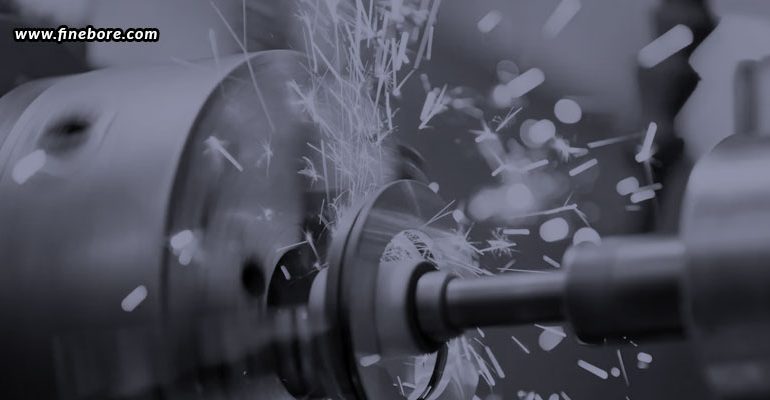
A significant portion of the mechanical energy involved in cutting is converted into heat around the cutting zone. During boring, heat is generated primarily through three interactions. First, the boring insert causes plastic deformation as it penetrates the workpiece and separates material into chips, converting cutting energy into heat. Second, friction occurs as chips slide across the insert’s rake face at high speed, contributing further heat. Third, contact between the cutting tool and machined surface can generate additional friction, particularly when cutting conditions are unsuitable or tool wear alters the cutting geometry. The amount of heat generated depends on factors such as workpiece material, cutting speed, feed rate, depth of cut, tool geometry, insert condition, and coolant effectiveness. Because boring occurs internally, removing this heat efficiently can be particularly challenging.
Why thermal effects matter in precision boring
Thermal effects become important when temperature-related dimensional changes approach the machining tolerance. In precision boring, even slight expansion of the workpiece or boring tool can influence the final dimensions and geometry of the machined hole. These thermal changes may result in oversized or undersized bores, dimensional variation, reduced concentricity, changes in roundness, tolerance deviations, and inconsistent fits. Thermal errors can also remain unnoticed during machining because a component may meet dimensional requirements while hot but change size as it gradually returns to ambient temperature. This makes thermal stability particularly important in precision boring operations where tight tolerances must be maintained consistently. Effective thermal management should therefore be considered an integral part of the overall boring process, alongside tooling, cutting parameters, machine stability, and coolant management, rather than being treated solely as a method of reducing cutting temperature.
Thermal expansion of boring tools
The boring tool is directly exposed to the cutting zone, making it particularly susceptible to heat. The amount of expansion depends on the material, temperature increase, and effective tool length. In a precision boring operation, even a small change in tool dimensions can alter the position of the cutting edge relative to the workpiece. This can influence the resulting bore diameter and geometry. The problem can become more pronounced with long boring bars, deep boring operations, high cutting speeds, extended machining cycles, and poor coolant access. Long-reach boring tools are especially sensitive because a greater effective length means that thermal expansion can have a more noticeable effect on the cutting position. Tool rigidity and thermal behaviour therefore need to be considered together when selecting tooling for precision boring applications.
Thermal expansion of the workpiece
The workpiece itself also absorbs heat during boring. As its temperature increases, the material expands. This expansion can temporarily change the dimensions of the bore being machined. Different sections of the workpiece may heat at different rates, creating localized expansion. This can produce dimensional differences between different areas of a large components, or components machined at different stages of a production cycle. It can also create differences between the entrance and deeper sections of a bore. A bore that appears to be within specification during machining may therefore measure differently after the component has cooled to a stable temperature. For this reason, manufacturers performing high-precision boring often need to account for workpiece temperature during inspection and process planning.
Thermal expansion of the machine tool
The machine can also experience temperature-related dimensional changes. Heat can originate from the spindle, motors, bearings, hydraulic systems, coolant systems, or cutting operations. As machine components warm up, their dimensions and relative positions can change slightly. Even though modern machines are designed for high precision, thermal growth can influence the relationship between the spindle, tool, and workpiece. This is particularly important during long machining cycles, where the machine may gradually reach a different thermal state than it had at the beginning of production. As a result, thermal stability of the entire machining system is important when extremely tight tolerances are required.
Key tooling and machining factors affecting heat generation
Heat generation during boring is influenced by both machining conditions and boring tool design, making their proper selection essential for thermal stability and accuracy.
- The role of cutting parameters
Cutting speed, feed rate, and depth of cut directly influence heat generation, cutting forces, and tool wear. These parameters should be optimized to balance productivity with thermal stability. Effective coolant delivery further helps control temperature, reduce friction, and improve tool life. In deep boring, through-tool coolant can provide more consistent cooling when access to the cutting zone is restricted.
- The role of tool geometry
Boring tool geometry directly affects cutting forces and heat generation. Factors such as rake angle, clearance angle, edge preparation, chip-breaker design, and insert grade should suit the workpiece material and machining conditions. Appropriate geometry enables efficient material removal while reducing friction and cutting resistance. Unsuitable geometry can increase heat generation, accelerate wear, and compromise machining stability.
Strategies for reducing heat related accuracy problems
Manufacturers can reduce thermal errors in boring operations through a combination of tooling, machine, and process controls. Key approaches include:
- Selecting appropriate cutting speeds and feeds
- Using suitable insert geometries
- Maintaining sharp cutting edges
- Ensuring effective coolant delivery
- Using rigid boring tools
- Minimizing unnecessary tool overhang
- Allowing machines to reach thermal stability
- Monitoring workpiece temperature
- Applying thermal compensation where appropriate
- Inspecting components after thermal stabilization
No single measure eliminates thermal effects completely. Consistent accuracy comes from controlling the complete machining system. For manufacturers seeking reliable tooling, FineTech Toolings is among the trusted boring tools suppliers in Bangalore, offering precision-engineered boring solutions designed to support stability, accuracy, and consistent machining performance.
Heat generation is an inherent part of boring operations, but its impact on machining accuracy can be effectively managed through proper process control. Thermal changes can influence overall machining consistency, making temperature management an important consideration in precision boring. As machining requirements become more demanding, manufacturers need to account for thermal stability alongside tooling, machine performance, and cutting conditions. A controlled machining environment helps minimize dimensional variation, maintain consistent bore quality, and support reliable production outcomes. Effective thermal management also contributes to better tool performance, improved process stability, and reduced manufacturing inconsistencies. By treating heat control as an integral part of the boring process, manufacturers can achieve greater accuracy, repeatability, and efficiency, while maintaining the quality standards expected in modern precision machining applications.