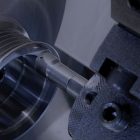
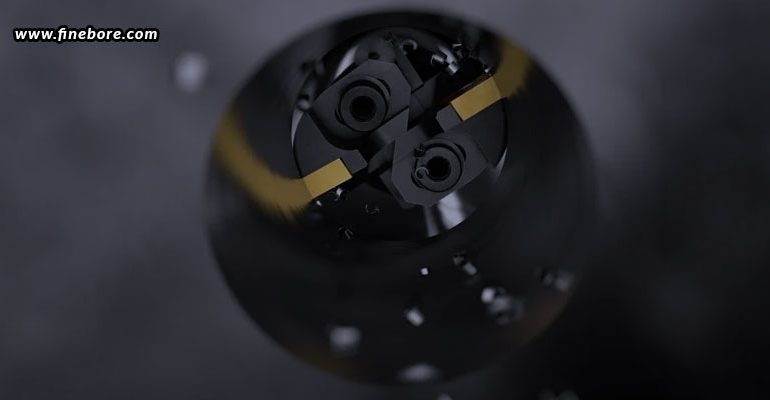
Interrupted cutting is a demanding internal machining condition in which the cutting edge repeatedly engages and disengages from the workpiece, causing sudden changes in cutting forces. Keyways, slots, cross-holes, grooves, uneven surfaces, and irregular internal features can create such conditions. If the boring bar is unsuitable, repeated impacts may cause vibration, insert chipping, premature tool wear, poor surface finish, dimensional variation, or tool failure. Selecting the right boring bar therefore requires consideration of rigidity, material, overhang, insert geometry, cutting parameters, machine stability, and workpiece characteristics to maintain stable and consistent machining performance.
Understanding Interrupted Cuts
An interrupted cut occurs when the cutting edge repeatedly moves into and out of contact with the workpiece during machining. Instead of experiencing a relatively constant cutting load, the boring bar is subjected to fluctuating forces. This can occur when machining internal surfaces that contain keyways, cross-holes, slots, grooves, uneven or irregular surfaces, or interrupted internal profiles. Each time the cutting edge enters the material, it experiences a sudden increase in cutting force. When it exits, that force drops again. This repeated loading and unloading creates impact forces that can affect both the boring bar and insert. Selecting the right tooling in such situations is very important that can handle these conditions effectively.
Why Interrupted Cuts Are Challenging
Interrupted cuts introduce repeated changes that can destabilize the tool. The main challenges include:
- Sudden cutting force changes: When the cutting edge re-enters the material, the boring bar experiences an immediate increase in load. These repeated force changes can increase mechanical stress on the tool.
- Vibration and chatter: The impact created during repeated engagement can excite vibrations in the boring system. If these vibrations become excessive, chatter may develop and affect the finished bore.
- Insert chipping: The cutting edge experiences repeated impact when entering the material. An insert that is not suitable for interrupted cutting may chip or fracture prematurely.
- Surface finish issues: Vibration and unstable cutting can leave visible marks on the internal surface, reducing the quality of the finished bore.
- Dimensional variation: Tool movement caused by fluctuating cutting forces can affect bore diameter, roundness, and overall dimensional consistency.
These challenges make boring bar selection particularly important for interrupted machining applications.
Key Factors to Consider When Selecting Boring Bars for Interrupted Cuts
Selecting a boring bar for interrupted cuts requires evaluating several factors that influence machining stability, tool durability, accuracy, and overall cutting performance.
- The boring bar material
The material of a boring bar directly affects its stiffness, strength, and vibration resistance. Steel bars offer toughness for general applications, while carbide bars provide greater rigidity for demanding operations. Damped boring bars help control vibration during deep internal machining. Selection should therefore consider bore depth, tool overhang, cutting forces, and interruption severity.
- Matching the boring bar to the workpiece material
Different workpiece materials respond differently to interrupted cutting. Steel requires rigid tooling and suitable inserts to manage impact forces, while stainless steel benefits from stable tooling and appropriate geometry. Cast iron demands wear resistance and edge strength, whereas aluminium requires suitable cutting geometry and effective chip evacuation to maintain surface quality and prevent material buildup.
- Higher boring bar rigidity
A rigid boring bar is better able to resist deflection when cutting forces change rapidly. It also helps maintain the position of the cutting edge during repeated engagement and disengagement. Higher rigidity can bring reduced tool deflection and better vibration resistance, resulting in dimensional accuracy, machining stability, and consistent surface finish. Moreover, the largest suitable boring bar diameter that can provide adequate clearance for safe movement and chip evacuation is beneficial because a larger cross-section provides greater resistance to bending.
- Minimized tool overhang
The longer the unsupported portion of a boring bar, the more susceptible it becomes to bending and vibration. When interrupted cuts introduce repeated impact forces, excessive overhang can result in increased deflection and greater vibration, leading to insert instability, reduced dimensional accuracy, and poor surface finish. The boring bar should therefore be extended only as far as necessary to reach the required machining depth.
- Insert designed for interrupted cutting
While the boring bar provides structural support, the insert directly experiences the repeated impacts of interrupted cutting, making its selection equally important. An insert with adequate toughness and a robust cutting edge can withstand repeated loading more effectively. The insert grade should also suit the workpiece material and cutting conditions, balancing wear resistance with resistance to chipping and fracture for stable performance and predictable tool life.
- Insert geometry
Insert geometry affects cutting forces and the way the tool responds to interrupted engagement. A geometry that generates excessive cutting forces can increase the impact experienced by the boring bar and insert. Suitable geometry can help reduce cutting resistance and improve chip formation, while reducing vibration, controlling cutting forces, and protecting the cutting edge. The main goal is to achieve an appropriate balance between cutting efficiency and edge strength.
- Cutting parameters
Cutting parameters directly influence the forces generated during interrupted machining. Cutting speed should suit the workpiece material, insert grade, and machining conditions, while excessive speed can increase heat and tool wear. Controlled feed rates help manage cutting forces and surface finish, whereas smaller depths of cut reduce mechanical loading, helping balance productivity, stability, and tool life.
- Proper tool holding
A secure tool-holding arrangement is essential when machining interrupted surfaces. Repeated cutting impacts can amplify any weakness in the setup. If the boring bar is not securely clamped, even a rigid tool may experience unwanted movement. Proper tool clamping, accurate tool alignment, and stable tool holder condition are all important considerations. A rigid connection between the machine, tool holder, boring bar, and insert provides a stronger foundation for absorbing cutting forces. For manufacturers seeking precision boring solutions, FineTech Toolings offers a range of boring bars in Bangalore and specialized boring tools designed to support stable and accurate machining applications.
- Chip evacuation
Chip evacuation should not be overlooked during interrupted boring. Accumulated chips can interfere with the cutting process and may become trapped within the bore. This can lead to surface damage, insert wear, or unstable cutting. The boring bar should provide sufficient internal clearance for chips to move away from the cutting zone. Effective coolant delivery can further support chip evacuation and help control cutting temperature.
Selecting the right boring bar is essential for achieving stable and reliable results during interrupted machining. A suitable tool can help maintain machining consistency, reduce common cutting issues, and support better overall productivity. By considering the specific requirements of each application and choosing tooling accordingly, manufacturers can achieve dependable performance, improved quality, and efficient internal machining operations. Careful tool selection also helps manufacturers manage demanding machining conditions with greater confidence while supporting repeatable results across different production requirements and component designs.