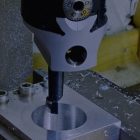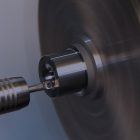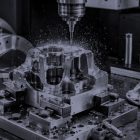
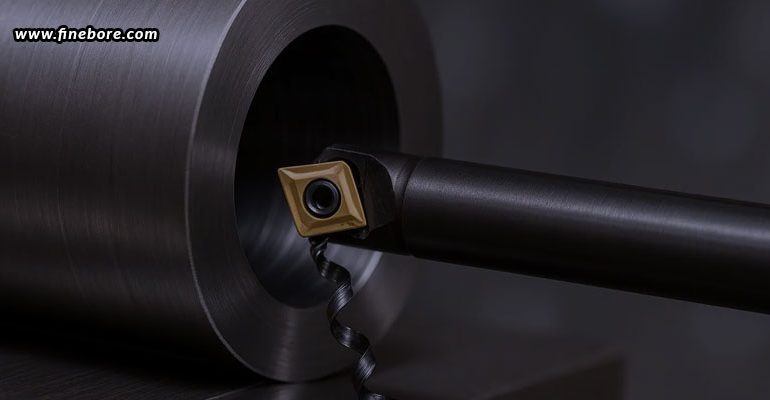
Blind hole machining, with its fixed depth and closed-end design, is one of the most challenging internal machining operations, requiring high precision, stability, and controlled cutting conditions. Since the process involves difficulties such as chip evacuation, tool clearance, depth accuracy, and machining consistency, selecting the right tool becomes essential. An unsuitable boring bar can lead to vibration, poor surface finish, dimensional inaccuracies, insert damage, and reduced productivity. Choosing a boring bar based on bore dimensions, workpiece material, machining depth, and production requirements helps manufacturers achieve consistent and reliable results while optimizing machining performance and preventing common operational issues.
Challenges in blind hole machining
Blind hole machining demands exceptional precision and control because the cutting process takes place within an enclosed space. Achieving accurate dimensions and smooth finishes requires overcoming several operational complexities during machining.
- Restricted tool movement
The closed end of a blind hole creates limitations for tool movement and positioning during machining. Since the cutting tool operates within a confined area, the boring bar must have the right length, rigidity, and design to access the required depth without interfering with the hole bottom. Proper tool selection helps prevent unwanted contact, protects the workpiece, and ensures accurate machining throughout the operation.
- Limited chip evacuation
One of the biggest challenges in blind holes is chip removal. Since the hole has a closed end, chips cannot easily exit through the opposite side. Accumulated chips can interfere with cutting performance, leading to scratching of the bore surface, insert damage, increased cutting forces, and poor dimensional accuracy. The boring bar must be such that it provides sufficient clearance and supports effective coolant flow to help remove chips efficiently.
- Increased risk of vibration
Blind hole machining frequently involves extended tool reach, particularly when working with deeper cavities. As the boring bar extends further into the workpiece, reduced rigidity can affect machining stability and accuracy. Longer overhangs make the tool more vulnerable to deflection, vibration, and surface quality issues. Using a rigid boring bar with appropriate geometry and support helps maintain cutting stability, improve precision, and achieve consistent results during deep internal machining operations.
Why boring bar selection is critical for blind holes
Selecting the right boring bar is essential for overcoming the complexities of blind hole machining. Proper tool design helps manage internal cutting conditions, maintain stability, and achieve accurate, high-quality results. Since blind holes require precise control throughout the machining process, the choice of boring bar directly impacts performance and final output. This is because an unsuitable tool can lead to machining difficulties, affecting accuracy, surface quality, and overall productivity. The correct boring bar helps achieve controlled hole depth, accurate diameter, and improved surface finish. Its rigidity and suitable design reduce vibration, improve machining stability, and support efficient chip evacuation, resulting in longer tool life and consistent performance. Selecting the right boring bar is thus not just a tooling decision, but also a key factor influencing overall machining efficiency.
Selecting the right boring bar
Selecting the right boring bar plays a critical role in achieving consistent performance during machining. The tool must be carefully matched to application requirements, machining conditions, and the challenges of blind hole operations.
- Selecting the correct boring bar diameter
A larger diameter boring bar provides higher rigidity, better vibration resistance, reduced deflection, and improved dimensional accuracy. However, selecting the maximum possible diameter is not always suitable, as adequate clearance inside the bore is essential. The ideal choice is a boring bar that fits properly while allowing efficient coolant flow and chip evacuation. Using an undersized boring bar can compromise stability, increase vibration, and negatively affect machining performance.
- Considering the blind hole depth
Hole depth plays an important role in boring bar selection, as deeper holes require greater tool reach. However, increased overhang can reduce rigidity and make the tool more sensitive to cutting forces and vibration. For deep blind hole machining, boring bars with optimized length-to-diameter ratios, enhanced rigidity, and suitable damping characteristics should be considered. Maintaining the right balance between reach and rigidity helps achieve stable, accurate, and consistent machining results.
- Choosing the right material
The boring bar material directly influences performance, especially in demanding blind hole applications. Steel boring bars offer toughness, reliability, and cost-effectiveness for general machining with limited extension requirements. Carbide boring bars provide higher rigidity, making them suitable for deeper holes, tighter tolerances, and improved surface finishes. For challenging operations, damped boring bars help control vibration through internal damping mechanisms, improving stability and extending tool performance.
For manufacturers seeking reliable boring solutions, FineTech Toolings offers precision-engineered boring bars in Bangalore designed for various internal machining requirements. Their tooling solutions help industries achieve better accuracy, stability, and consistent performance across challenging machining applications.
Considering insert selection and geometry
The boring bar itself is only one part of the machining system. Insert selection also influences blind hole performance. Important insert considerations include:
- Cutting edge geometry: The insert geometry affects cutting forces and chip formation. A geometry designed for lower cutting resistance can help reduce vibration and improve tool stability.
- Insert grade: The insert material and coating should match the workpiece material and machining conditions. Proper insert selection improves tool life, cutting efficiency, and surface finish quality.
- Insert size: The insert size should be appropriate for the boring bar and machining depth. Oversized inserts may increase cutting forces, while undersized inserts may lack durability.
Verifying machine and tool holder compatibility
Verifying machine and tool holder compatibility helps optimize the complete machining system, improving accuracy, tool life, surface finish, and productivity during blind hole machining operations.
- Machine capability: The machine must provide adequate power, rigidity, and stability to support the boring bar and cutting conditions, ensuring accurate machining and reducing vibration-related issues.
- Tool holder connection: A compatible tool holder interface ensures secure clamping, proper alignment, and stable tool positioning, minimizing movement and improving machining consistency during blind hole operations.
- Tool overhang and setup: The boring bar length should match the machine setup and available support to prevent excessive deflection, maintain rigidity, and achieve reliable machining performance.
Best practices for boring bar selection
To achieve reliable machining results, a systematic approach should be followed while making a boring bar selection, which includes:
- Analyzing the bore diameter and depth requirements
- Selecting the largest suitable boring bar diameter
- Ensuring effective chip evacuation
- Minimizing tool overhang wherever possible
- Choosing the appropriate tool material based on machining conditions
- Selecting inserts designed for the workpiece material
- Verifying machine and tool holder compatibility
These practices help create a stable machining process with improved accuracy and productivity.
Choosing the correct boring bar is essential for achieving reliable performance in internal machining operations. The right tool selection directly influences the efficiency, consistency, and quality of the machining process. Since every application has unique requirements, selecting a suitable boring bar helps manufacturers maintain better control over operations and achieve desired outcomes. A well-matched tool supports smoother machining, reduces operational challenges, and contributes to improved productivity. Understanding the role of boring bar selection allows manufacturers to make informed decisions and ensure dependable performance across different machining applications.