Manufacturing has always been governed by tolerances, but what was once considered precise is now being regarded as inadequate. Millimetre-level tolerances have shifted to micron-level accuracy. This shift reflects a fundamental change in how modern manufacturing defines quality, reliability, and competitiveness. As industries adopt advanced materials, complex geometries, and high-performance applications, even the smallest deviation can impact functionality, safety, and performance. In today’s manufacturing landscape, micron-level precision is no longer a premium advantage; it has become a baseline requirement for staying relevant and competitive.
How tolerance standards have evolved in modern manufacturing
Machining tolerances were earlier dictated only by functional fit. If a shaft rotated freely, or a bearing seated properly, or a housing aligned well, it was considered acceptable. But today, this mindset has shifted. Simply fitting for purpose is not enough. Components are no longer evaluated individually; they are a part of complex high-performance systems, where even minor dimensional deviations can affect efficiency, durability, and long-term reliability. As systems have started becoming more compact, lighter, faster, and energy-efficient, tolerances must tighten accordingly. This evolution reflects a broader shift toward precision-driven design, where tolerances directly influence system-level performance rather than just assembly feasibility.
Why precision is no longer optional
Customers today are more informed and demanding than they were before. Now, they expect consistent quality across high-volume production, compliance with global quality standards, parts that perform reliably under extreme conditions, and minimal vibration between batches. Manufacturers unable to demonstrate such quality and performance or repeatable micron-level control risk losing long-term contracts. Meeting these evolving expectations requires manufacturers to rely on precision boring heads that enable accurate micron-level adjustments, ensuring repeatable quality and tighter tolerances. FineTech Toolings, recognized as top boring head manufacturers in India, delivers high-accuracy boring solutions engineered for consistency, repeatability, and performance. Their advanced designs help manufacturers meet global quality standards, reduce vibration, and maintain tight tolerances across high-volume production.
How stricter quality audits are driving tighter tolerances
Modern quality audits go far beyond simple dimensional spot checks, extending into statistical process control, capability studies, and strict traceability requirements. Auditors now expect manufacturers to exhibit consistent micron-level tolerance control, prove that accuracy is built into the tooling and process rather than relying on operator skill, and show clear strategies for compensating for thermal drift, tool wear, and machine variation. Documentation, repeatability, and data-backed evidence have become as important as the machined part itself. Meeting these rising expectations demands not only capable machines, but also precision tooling, stable processes, and disciplined manufacturing practices that ensure repeatable, audit-ready performance. Organizations that fail to adapt often face non-compliance risks, delayed approvals, and increased audit scrutiny.
How micron-level errors impact system performance
A single dimensional error of just a few microns may seem very small when looking at a single part, but when multiple parts come together in an assembly, these tiny errors add up. This can lead to poor alignment, uneven load sharing, increased friction, and faster wear. In high-speed or high-load applications, such errors can result in unexpected system failures, increased vibration and noise, reduced energy efficiency, and accelerated component fatigue. These issues often surface only after products are deployed in real-world conditions, making them costly to diagnose and correct. As production volumes scale, these issues translate into warranty claims, recalls, and reputational damage. What begins as a minor tolerance deviation can ultimately compromise overall system integrity.
The hidden cost of inaccurate machining
The cost of inaccuracy goes far beyond scrap parts; it often leads to rework and extra operations, longer inspection times, production delays, and even customer rejections, which can damage long-term trust. Hidden costs like overtime, expedited shipping, and production bottlenecks further strain operational efficiency. In contrast, investing in tools and processes that can consistently achieve micron-level accuracy helps improve first-pass yield, stabilize production, and ultimately reduce overall manufacturing costs. Precision-driven machining shifts the focus from correction to prevention, allowing manufacturers to operate with greater predictability and control. Over time, this approach delivers measurable financial benefits across quality, throughput, and customer satisfaction.
Why precision tooling is critical for micron accuracy
While modern machines offer impressive positional accuracy, true micron-level performance relies significantly on tooling. Tool rigidity, adjustment resolution, and thermal stability – all influence final bore accuracy. Precision boring heads and stable tool interfaces help translate machine capability into consistent results on the shop floor. Unlike traditional methods that require multiple trial cuts to reach the right size, precision tooling allows machinists to make small, controlled adjustments. This level of control reduces dependency on experience-based guesswork. It improves first-pass accuracy, shortens setup time, and reduces operator effort and variation. Over extended production runs, these advantages compound into higher productivity and more predictable quality outcomes.
Process control and measurement in micron-level machining
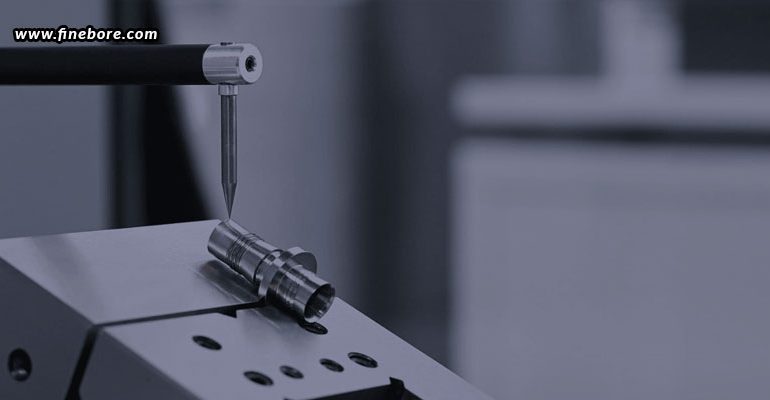
As tolerances become tighter, measurement methods must improve along with machining processes. Tools like bore gauges, in-process measurement systems, and controlled inspection areas are needed to check micron-level accuracy. Just as important, inspection results should be fed back into the machining process to continuously improve quality. Micron-level accuracy is also affected by temperature. Heat from machining, changes in room temperature, and tool expansion can alter results. To manage this, manufacturers plan processes carefully, use thermally stable tooling, and maintain controlled shop-floor conditions. Such discipline is essential for sustaining accuracy over long production cycles.
Building a precision-driven manufacturing culture
Achieving micron-level accuracy goes beyond investing in advanced equipment; it requires a cultural shift toward consistency, documentation, and continuous improvement. Precision becomes a shared responsibility across engineering, production, quality, and maintenance teams, treated as a baseline expectation rather than an exception. As the transition from millimetres to microns accelerates and products grow more complex, manufacturers who fail to adapt risk being limited by outdated processes and tolerance philosophies. In contrast, organizations that embrace ultra-fine machining, invest in precision tooling, and align their quality systems with modern expectations build greater resilience, scalability, and long-term competitiveness – delivering consistent, efficient, and profitable results.
Precision is no longer an option reserved for niche applications; it is the basic foundation of modern manufacturing. From customer expectations and quality audits to system performance and financial outcomes, micron-level accuracy influences every aspect of manufacturing. It directly affects product reliability, assembly performance, and long-term durability in demanding applications. As tolerances tighten and competition increases, manufacturers must rethink traditional processes and invest in tools and systems designed for consistency. Those who recognize this shift and act on it will not only meet today’s standards, but also build stronger quality cultures, reduce operational risk, and help define the future of manufacturing.