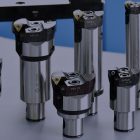
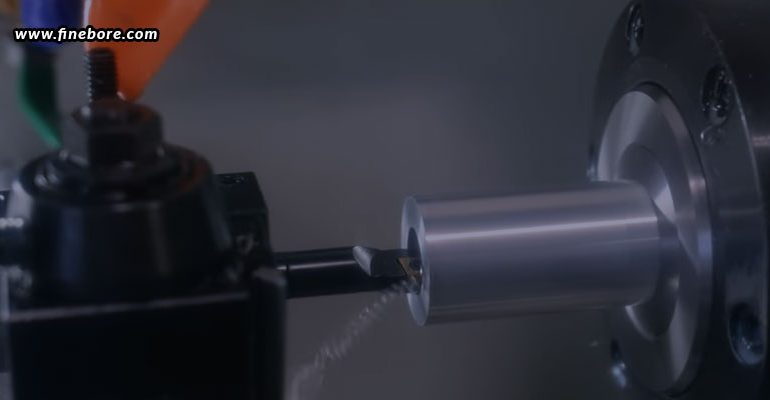
Boring bars, even those made using the best materials and engineering practices, have a finite working life. And, continuing to use a work out or compromised boring bar can lead to costly after-effects, including scrap, rework, machine downtime, and compromised part quality. This means the boring bar should be replaced promptly once any of these issues are observed. However, loss in precision and performance is gradual and subtle, which can be mistaken for setup issues or parameter errors. This is why careful and objective evaluation of boring bar performance is essential to determine when replacement is necessary. This blog outlines the key indicators of boring bar wear and the critical parameters to consider when deciding on replacement.
How boring bar condition can directly affect precision
Boring bars need to perform reliably under even the most challenging machining conditions to bring about precise and consistent hole dimensions. The conditions may include vibration-prone operations, internal cutting applications, extended overhangs, and machining materials with varying hardness. When a boring bar is subjected to such demanding environments for prolonged periods, the stresses can affect balance, rigidity, and insert seating accuracy, which can lead to reduced dimensional accuracy, poor surface finish, increased vibration and noise, and inconsistent repeatability. If left unaddressed, these issues not only compromise part quality, but also increase tool wear, cycle times, and overall machining costs.
Key signs indicating an issue
Boring bars can help achieve accurate and consistent bore dimensions. Over time, however, even well-designed boring bars begin to wear due to continuous exposure to vibration, cutting forces, and demanding machining conditions. Operators need to recognize early warning signs to prevent declines in accuracy and productivity.
- Inconsistent bore diameters: If bore sizes begin fluctuating between parts, the boring bar may be losing its rigidity or experiencing internal fatigue. Repeatability issues often indicate structural wear rather than operator error.
- Gradual decline in surface finish: When mirror-like finishes turn dull or show waviness, it is a strong indicator of tool instability. Micro-vibrations caused by worn bars can result in subtle surface imperfections.
- Excessive noise during cutting: Quieter machining means good tool stability, and a noticeable increase in cutting noise often signals internal vibration issues, which is why rising noise levels should never be ignored.
- Increased chatter: If chatter occurs at speeds and feeds that were once stable, the boring bar’s vibration resistance may be compromised. This is especially common in long-reach or deep-bore applications.
- Frequent insert breakage: A worn boring bar may no longer support inserts uniformly. Poor insert seating, internal wear, or slight deflection increases mechanical shock, leading to premature insert failure and higher tooling costs.
- Difficulty holding tight tolerances: Tolerance creep is a sign of a boring bar nearing the end of its service life. Compensation through offsets may temporarily help, but often masks the root problem.
The above-mentioned warning signs can indicate a gradual decline in boring bar performance. However, not all indicators are immediately visible. Operators should look for slowing down feeds and check parts more often to identify declining stability or repeatability, signalling a need for replacement.
What happens when a boring bar is pushed too far?
Pushing a boring bar far beyond its effective lifespan can lead to significant hidden costs. Dimensional failures can increase scrap and rework, while unplanned tool stoppages can disrupt production schedules and cause machine downtime. Worn-down boring bars can also accelerate insert wear and generate vibrations that can raise spindle load and energy consumption, resulting in increased tooling costs. Furthermore, noisy and unstable cutting can contribute to operator fatigue, reducing focus and overall productivity. In many cases, these indirect costs quickly outweigh the savings from prolonging tool life, making timely replacement a more economical choice.
Cost-benefit analysis of replacement vs. extended boring bar usage
It is clear how a boring bar pushed too far beyond its effective lifespan can lead to significant hidden costs. But, we will get into more detail to analyze the cost benefit of replacing a worn-down boring bar. Evaluating the economics of replacement versus extended use reveals that timely replacement is often the more cost-effective choice.
- Energy consumption: Prolonged usage of a worn boring bar increases vibrations, raising spindle load and power usage, while timely replacement restores stability, reduces energy consumption, and improves overall machine efficiency during operations.
- Extra finishing & scrap: Continuing to use a worn-down boring bar often causes dimensional inconsistencies, leading to extra finishing passes and higher scrap rates, whereas timely replacement ensures accurate parts with minimal waste and rework.
- Machine downtime: Worn-down boring bars can trigger unplanned stoppages, disrupt schedules, and reduce throughput, while replacing the bar promptly prevents downtime, maintains smooth production, and supports consistent manufacturing efficiency.
- Operator fatigue: Noisy and unstable cutting from prolonged usage increases operator fatigue and the likelihood of errors, whereas timely replacement ensures stable, precise operation, reducing stress and maintaining focus throughout machining processes.
Choosing the right replacement boring bar
Now that we know when and why a replacement is necessary, we move to the next step of identifying how to choose the right replacement bar. After all, the right purchase can prove to be an opportunity to upgrade performance.
- Evaluating application requirements: It is essential to consider bore depth, diameter, material, and tolerance requirements before choosing a boring bar. Deeper or challenging bores often benefit from vibration-damped designs to maintain accuracy and reduce cutting issues.
- Matching tool rigidity to machine capability: It is important to match the tool rigidity to machining capability. Tool selection should balance spindle power, holder quality, and setup stiffness to ensure stability, precision, and consistent bore quality during operations.
- Considering vibration-damped technology: Modern vibration-damped boring bars extend reach, reduce chatter, improve surface finish, and minimize noise. They are especially effective for long-reach applications, hard materials, and precision machining requiring consistent, reliable performance.
- Focusing on total cost of ownership: Only considering the initial price of the boring bar is not wise. Longer lifespan, fewer rejects, reduced downtime, and higher overall productivity, even with a higher initial price, can prove to be effective.
- Choosing a reliable manufacturer: Choosing the right manufacturing partner is equally important. For instance, FineTech Toolings is one of the most reputed precision boring bars manufacturers in Bangalore that specializes in precision engineering, high-quality materials, and consistency. Their solutions cater to demanding machining environments, offering reliable performance across both standard and advanced boring applications.
Knowing when to replace a boring bar is a critical skill in precision machining. Accuracy loss is not immediately noticeable; it slowly creeps in through surface finish issues, tolerance drift, chatter, and declining consistency. Ignoring these signs leads to higher costs, reduced productivity, and compromised quality. By recognizing early warning signs, and investing in the right replacement at the right time, machining excellence can be maintained, and long-term operational efficiency guaranteed. Replacing a boring bar is thus a strategic step toward sustained precision.