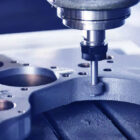

In today’s fast-paced manufacturing environment, adaptability is as crucial as accuracy. Mixed-part machining, where various components are produced in small quantities, demands tooling configurations that can swiftly adjust without compromising precision. Boring tools, in particular, play a key role in ensuring uniformity across different part sizes. An effectively optimized boring tool setup guarantees minimal downtime, quicker changeovers, and consistent quality. By utilizing modular tool assemblies, accurate holders, and presetting systems, manufacturers can achieve tight tolerances while enhancing operational efficiency. With the right mix of components and methods, boring tool setups transform into significant drivers of productivity and flexibility in high-mix, low-volume production.
Understanding the core components of a boring tool setup
Mixed-part machining setups necessitate both modularity and rigidity. Let’s examine the key components:
- Tool holders: Tool holders are fundamental to a boring tool setup, linking the boring assembly to the machine spindle. Important features to consider include vibration dampening, repeatable concentricity, and compatibility with quick-change systems. For high-speed applications where minimizing runout is essential, shrink-fit or hydraulic holders are advisable due to their excellent grip and stability.
- Boring heads: Precision boring heads, available in both digital and analog forms, provide micron-level adjustability crucial for high-precision tasks. Digital heads offer real-time diameter feedback, making them suitable for machining highly variable or complex components. Balanced finishing heads further improve performance by ensuring consistent surface quality, even in difficult or unstable setups, thus guaranteeing high repeatability and minimal rework in mixed-part production settings.
- Modular extensions and adapters: Extensions offer flexibility in reach and enable adjustments in tool length without needing to replace the entire setup. They accommodate different bore depths and machine configurations, making them vital for mixed-part machining. To guarantee stability and precision, particularly in deep bore applications, it is advisable to utilize form-fit locking systems that ensure high rigidity and minimize the risk of tool deflection.
- Indexable inserts: The geometry of inserts and the choice of coating are vital for maximizing boring tool performance. Positive rake inserts facilitate smoother chip control and lower cutting forces, particularly in sensitive operations. For non-ferrous materials such as aluminium, PCD (Polycrystalline Diamond) inserts deliver exceptional wear resistance and surface finish. The right combination enhances tool life, precision, and machining efficiency.
- Presetting and length compensation tools: Accurate presetting is crucial for ensuring consistency and precision in boring operations. By digitally saving length and diameter offsets, workshops can exactly replicate setups, which decreases the necessity for trial cuts. This approach not only reduces scrap and rework but also accelerates changeovers, facilitating the maintenance of tight tolerances in environments that handle mixed parts.
Managing variation with a modular mindset
When machining components of varying sizes, materials, or depths, a fixed tooling system often becomes a bottleneck, limiting flexibility and productivity. A modular tooling arrangement provides the adaptability essential for high-mix, low-volume environments by allowing quick reconfiguration without complete tool replacement.
- Fast adaptability: Use the same base holder and extensions for different bore sizes.
- Inventory reduction: Eliminate the need to stock a large number of specialized tools.
- Quick repairs: Replace only the worn or damaged segments, reducing downtime and cost.
To further optimize efficiency, consider investing in a tooling matrix organized by part type. It simplifies setup planning and ensures operators consistently select the most effective configuration, improving both speed and accuracy in production.
Importance of stability and rigidity
Boring operations are highly sensitive to vibration, particularly in deep-hole machining or interrupted cuts. Excessive vibration can cause tool deflection, poor surface finish, and dimensional inaccuracies, all of which compromise part quality and increase the likelihood of rework. To maintain stability and precision, it’s essential to follow best practices during setup and execution.
- Use the shortest possible tool extensions to minimize leverage and reduce the risk of tool deflection. Longer extensions amplify vibration and compromise accuracy, especially in deep-hole operations. Keeping overhangs to a minimum ensures greater rigidity and improves overall machining results.
- Employ dampened boring bars with built-in vibration suppression systems designed to absorb harmonic frequencies. These tools are especially effective when working at extended lengths or on tough materials that tend to amplify vibration.
- Avoid unbalanced tools, as asymmetry in the setup can introduce harmonic chatter, disrupt cutting conditions, and cause uneven bore surfaces. Precision balancing reduces tool wear and enhances stability.
- Apply balanced cutting techniques such as symmetrical cutting paths and controlled feed rates to evenly distribute cutting forces. This reduces stress on both the tool and the workpiece, promoting better surface finishes and dimensional control.
Even a small runout of just 10 microns can lead to undersized bores or poor finishes. Always verify concentricity after assembling the tool to ensure peak performance, consistency, and extended tool life. A proactive approach to vibration control not only enhances machining accuracy but also boosts productivity, reduces scrap, and ensures long-term reliability of your boring operations.
Tool setup best practices for mixed-part environments
To ensure consistent performance in mixed-part machining, following a structured tool setup checklist is essential. Proper maintenance and verification practices help prevent errors, reduce rework, and extend tool life. A well-maintained tool system directly impacts part quality and production efficiency.
- Visual inspection: Check holders, boring heads, and inserts for wear or damage before each machining cycle. Even minor imperfections can lead to dimensional inaccuracies or surface defects.
- Torque settings: Use calibrated torque wrenches to avoid overtightening, which can distort components and affect accuracy. Consistent torque application ensures stability during operation.
- Preset verification: Reconfirm tool diameter and length settings against the job sheet before loading into the machine. This step minimizes setup errors and avoids costly scrap.
- Insert matching: Always use inserts suited to the specific material—this is especially important when alternating between steel, aluminium, or other alloys. Using the correct grade enhances tool life and finish quality.
Implementing this checklist helps maintain tight tolerances, improve surface finishes, and enhance overall machining efficiency. Consistent adherence not only boosts productivity, but also ensures long-term reliability of your tooling setup.
Smart technologies to add to your setup
To future-proof your boring operations in mixed-part production, adopting smart technologies can significantly enhance precision, uptime, and reliability. Consider the following innovations:
- Smart tool holders with RFID: Track tool life, insert types, and wear data in real time, enabling proactive maintenance.
- Digital boring heads: Allow on-machine diameter adjustments without disassembly, saving time and improving accuracy.
- Tool condition monitoring: Use sensors to detect vibration spikes or insert wear, helping prevent unexpected failures.
These intelligent systems are especially valuable in high-mix environments, where unpredictable tool behaviour can result in scrapped parts, delays, and increased costs. Integrating such solutions supports consistent quality and maximizes efficiency in modern machining operations.
An ideal boring tool configuration for mixed-part machining goes beyond having the right tool – it demands a system that is modular, repeatable, and digitally enabled. This ensures flexibility, precision, and reduced downtime in high-mix, low-volume production. Finetech Toolings, one of the trusted boring tools suppliers in Bangalore, offers high-performance solutions that help machine shops minimize changeover times, improve surface quality, and handle part variations with ease. As manufacturing shifts toward smaller batch sizes and greater customization, investing in a versatile boring tool setup becomes not just a technical advantage, but a strategic move for long-term business success.