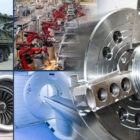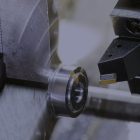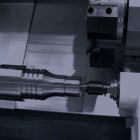

Sustainability has transitioned from being a mere trend in contemporary manufacturing to an essential strategy. As industries aim to lower carbon emissions, save energy, and embrace circular economy concepts, machining methods are experiencing a significant transformation. Among the various tooling systems utilized in metalworking, boring bars are the most common ones used to enhance machining efficiency, precision, and material usage. The design, material makeup, and operational techniques of these tools significantly affect the environmental impact of manufacturing processes. This blog delves into the boring bar designs and technologies that promote eco-friendly machining, talking about recyclable tool materials, energy-efficient cutting methods, and coolant conservation strategies that are propelling sustainability in workshops across the globe.
Eco-friendly boring bar designs & materials
Lightweight boring bar designs
Carbon-fibre reinforced boring bars, which were once primarily appreciated for their vibration damping properties, now play a role in eco-friendly manufacturing by reducing the amount of metal needed in production. Their lightweight design lowers energy usage during operation, while their enhanced stability prolongs tool life. Many composite designs also feature recyclable elements, helping to avoid unnecessary waste and assisting manufacturers in transitioning towards a circular materials economy.
Recyclable materials
Modern boring bars are increasingly designed with environment-friendly materials, starting with the metals used in their fabrication. Traditional boring bars primarily depended on solid carbide and tool steel, both of which can be recycled. However, contemporary manufacturers have taken it a step further by using recycled carbide powder, reclaimed high-speed steel, and hybrid alloys that combine both virgin and recycled materials. These advancements significantly reduce the requirement for new raw material extraction, thereby reducing the environmental impact associated with machining, and reducing CO₂ emissions during processing.
Advanced coatings
Newer advanced coatings like Titanium Aluminum Nitride (TiAlN) and Chromium Nitride (CrN) provide high thermal stability and are created through more environmentally friendly deposition methods. Diamond-Like Carbon (DLC) coatings further improve efficiency by minimizing friction and energy consumption. Their capacity to endure high temperatures also facilitates dry machining, which reduces dependence on coolants and promotes greener operations.
Energy-efficient cutting methods
Enhancing machining efficiency
Energy usage in machining is significantly influenced by factors like spindle load, cutting speed, tool rigidity, vibration levels, and heat generation. Eco-friendly boring bars are designed to reduce these inefficiencies by utilizing advanced materials, innovative geometries, and improved stability. By tackling the primary sources of energy wastage, these modern tools help manufacturers in lowering operational power needs, while maintaining consistent machining performance.
Vibration-damped designs
Vibration is a major factor contributing to excessive energy usage in boring operations. Instability during cutting raises power consumption, reduces cutting efficiency, and often results in deflection, rework, and increased scrap rates. Modern vibration-damped boring bars address these challenges by ensuring exceptional stiffness and stability, even with extended overhangs. This consistent cutting action reduces spindle load, allows for quicker machining with reduced power, and ultimately boosts energy efficiency throughout the process. FineTech Toolings, a leading manufacturer of boring bars Bangalore, supports sustainable machining with advanced vibration-damped designs, recyclable materials, and energy-efficient tooling solutions. Their innovative boring bars help workshops enhance precision, reduce waste, and adopt eco-friendly machining practices.
Refined geometry and high-performance inserts
Eco-friendly boring bars enhance energy efficiency further through optimized geometries and cutting-edge insert technology. Smooth flutes, refined rake angles, and material-specific chip breakers improve chip removal, minimizing heat accumulation and cutting resistance. Coupled with inserts that feature sharp edges, high wear resistance, and heat-resistant coatings, these design aspects significantly decrease cutting forces. Consequently, each machining operation demands less power, thereby reducing environmental impact while enhancing overall productivity.
Coolant-saving strategies
Targeted coolant delivery
The use of coolant presents significant environmental challenges in machining, particularly concerning disposal and chemical effects. Modern boring bars are essential in mitigating these problems by utilizing more effective coolant delivery techniques. Through-tool coolant channels direct the fluid accurately to the cutting area instead of inundating the entire workspace, which helps reduce the overall usage of the coolant. This targeted method improves heat dissipation, extends tool longevity, and reduces airborne mist, contributing to a cleaner and more sustainable machining process.
Minimum quantity lubrication techniques
Minimum Quantity Lubrication (MQL) represents another significant advancement in promoting eco-friendly machining practices. By supplying minute droplets of oil via an air stream, MQL substitutes traditional flood-coolant systems and significantly cuts down coolant consumption, often by 95-98%. This cleaner method facilitates easier chip recycling, lowers disposal and filtration expenses, and minimizes operator exposure to harmful chemicals. Numerous modern boring bars are specifically designed to work efficiently with MQL systems, further encouraging manufacturers to adopt greener practices.
Dry machining
For specific materials and applications, dry machining has emerged as a feasible approach to sustainability. The application of advanced coatings and heat-resistant carbide materials enables boring operations to be conducted without any coolant. This completely eliminates coolant waste, reduces operating expenses, and lowers emissions linked to coolant production. Although dry machining may not be suitable for all scenarios, it marks a significant step forward in environmentally responsible manufacturing when applied under appropriate conditions.
Reducing waste through extended tool life
Wear-optimized geometry
Contemporary boring bar inserts are designed with advanced geometries that effectively slow down wear. Features like reinforced edges, heat-resistant coatings, and meticulously optimized cutting profiles enable the tool to retain sharpness and stability for extended durations. These improvements directly prolong the tool’s usable life, minimizing the need for insert replacements and decreasing overall material usage in machining processes.
Sharpening and re-tipping
Rather than discarding tools at the initial signs of wear, workshops are now embracing regenerative methods that promote circular manufacturing. Practices such as insert regrinding, carbide head re-tipping, and even complete refurbishment of tool bodies empower operators to restore tools to performance levels close to their original state. By reusing parts instead of replacing them entirely, manufacturers can cut down on waste, conserve resources, and achieve more sustainable machining results.
Smart tool health monitoring
Innovations in digital manufacturing have led to the development of IoT-enabled boring bars that can monitor tool health in real time. These systems observe critical indicators such as wear levels, vibration patterns, and variations in cutting load, offering precise insights into the tool’s condition. Predictive maintenance informed by this data helps prevent unnecessary early replacements and avoids abrupt failures that could harm workpieces and create scrap. This leads to extended tool usage and a significant reduction in waste.
Sustainable machining practices
Optimizing cutting parameters
Choosing the appropriate speeds, feeds, and cutting depth is crucial for sustainable machining. When cutting parameters are fine-tuned, the machining process produces less heat, uses less energy, and exerts less strain on the tool, leading to slower wear rates. Enhancements in CNC programming further aid this by reducing unnecessary tool movements and shortening overall cycle times. Collectively, these advancements significantly diminish the environmental impact of boring operations.
Precision machining
Minimizing scrap is one of the most simple and effective strategies for improving sustainability. Contemporary boring bars equipped with vibration-damped bodies, precision-ground inserts, and innovative cutting geometries ensure consistent dimensional accuracy, excellent hole cylindricity, and smoother surface finishes. With fewer defects and rejected parts, manufacturers not only save materials but also eliminate the extra energy and resources needed for rework or remanufacturing.
Recycling metal chips
Metal chips produced during machining are valuable assets when recycled properly. Environmentally conscious workshops make sure to sort chips by alloy type, clean them to eliminate coolant contamination, and compact them for better storage and transport efficiency. These recycling methods help reduce landfill waste and lessen the need for newly mined raw materials, aiding the machining industry in transitioning towards a more circular and resource-efficient manufacturing system.
Enhancing machine utilization
Responsible machine operation is another vital aspect of sustainability. Minimizing idle spindle time, planning machining tasks to prevent energy spikes, and activating energy-saving modes on CNC machines all help lower power consumption. By operating equipment more effectively and cutting down on unnecessary operational hours, manufacturers can significantly reduce their environmental impact, while maintaining – or even improving – productivity.
Eco-friendly designs and practices for boring bars assist manufacturers in minimizing waste, enhancing efficiency, reducing reliance on coolants, and decreasing energy usage. Through the use of recyclable materials, advanced tool engineering, or more sustainable machining methods, boring bars are now essential in promoting responsible manufacturing. By adopting these advancements, workshops can fulfill contemporary environmental requirements while also achieving greater profitability, improved machining performance, and a more robust competitive advantage. If the machining industry continues to prioritize sustainability, boring bar technology will develop into a key player in fostering cleaner, more efficient manufacturing environments.