In contemporary machining, the distinction between success and failure is quantified in microns. A deviation that is imperceptible to the naked eye may pass inspection but can escalate into vibration, wear, inefficiency, and failures in the field. As machines evolve to be faster, more compact, and increasingly demanding, the notion of ‘good enough’ is no longer acceptable. Tolerance discipline now dictates process stability, product longevity, and customer trust. Inaccuracy is not merely a dimensional concern; it disrupts assemblies, increases rework, inflates warranty costs, and diminishes brand equity. Manufacturers that manage precision from the outset safeguard productivity, lower lifecycle costs, and guarantee consistent performance in high-demand applications where reliability is essential, and every micron has a direct impact on operational and commercial success.
Why small errors rarely stay small
A single bore that is slightly oversized or marginally out of round may not appear concerning. However, in practical assemblies, components interact in a dynamic manner. Shafts rotate at high speeds, bearings endure variable loads, seals function under pressure, and thermal expansion constantly modifies contact conditions. In such settings, even the smallest dimensional variation can disrupt load distribution, concentrate stress in critical areas, increase friction at contact points, raise operating temperatures, and cause unwanted vibrations that gradually undermine performance and service life. As production volumes increase, these effects compound. What starts as a micron-level deviation in machining evolves into a system-level performance challenge.
Why individual accuracy is not enough
High-performance products depend on the flawless interaction of various precision components, each with its own allowable dimensional variation. When these variations come together during assembly, they result in what is referred to as tolerance stack-up. Without rigorous control, this accumulation can cause misalignment between mating parts, leading to unstable or excessive clearances, localized contact, uneven wear, noise, vibration, and diminished mechanical efficiency. The significant challenge lies in the fact that each individual component may still meet its specified tolerance, yet the assembled system may not function as expected. This highlights that tolerance management is not just a requirement on drawings, but a critical system-level discipline necessary for ensuring functional reliability, predictable performance, and long-lasting durability.
The operational impact on the shop floor
Dimensional inconsistencies on the shop floor hinder productivity, escalate corrective efforts, and divert attention from efficient manufacturing to reactive problem-solving.
- Rising rework and scrap rates
Inconsistent bore accuracy often becomes apparent during assembly. Components that pass individual inspections may not fit properly when matched with mating parts. This results in manual adjustments, selective assembly, additional machining processes, and outright rejection of parts. Each of these scenarios consumes machine time, labour, and inspection resources, ultimately decreasing overall productivity.
- Production delays and bottlenecks
When dimensional variations necessitate repeated trial cuts or corrective machining, cycle times lengthen and scheduling becomes erratic. Downstream processes face delays, creating bottlenecks throughout the production line. In high-volume settings, even minor inefficiencies can lead to substantial delivery delays and contractual penalties.
- Increased inspection burden
Inadequate tolerance management transfers the responsibility from machining to quality assurance. Rather than ensuring uniformity, inspection teams find themselves in a reactive position – sorting, measuring, and validating each part separately. This responsive strategy raises operational expenses without addressing the underlying causes of variation.
The financial cost of inaccuracy
Dimensional inaccuracies impact much more than just the quality of parts; they subtly increase costs throughout production, supply chains, customer relations, and the long-term viability of the business.
- The visible costs
The observable costs associated with inaccuracies are the simplest to quantify – wasted materials, hours spent on rework, accelerated wear on tools due to repeated use, and extra time spent on inspections. Although these costs are regularly monitored and documented, they only account for a fraction of the overall financial repercussions on a machining operation.
- The hidden costs
Even more detrimental are the concealed losses that quietly build up in the background. Decreased machine utilization, a lower first-pass yield, surplus inventory held as a safety net, customer rejections, and expedited shipments for replacement parts gradually erode profitability and diminish a manufacturer’s competitive edge over time.
- Warranty, recall, and reputational damage
In high-performance industries, the repercussions go beyond the production floor. Dimensional inaccuracies that manifest in the field lead to warranty claims, product recalls, and a decline in customer confidence – where the expense of a single recall can surpass the investment needed to implement robust, precision-focused processes throughout the entire production facility.
Why “good enough” machining fails in high-performance applications
In traditional machining, achieving a basic fit was adequate, but contemporary components need to operate quietly, efficiently, and reliably under challenging conditions. This increases the significance of precise geometry, consistent surface finish, accurate alignment, and stable clearances, as being ‘within tolerance’ without process consistency can still undermine system performance. The stakes are even higher in high-speed, high-load applications, where even minor deviations can lead to vibration, energy loss, and accelerated fatigue. Thermal expansion and dynamic forces constantly alter component geometry during operation; if the initial machining accuracy is not tightly regulated, these effects can push parts beyond their functional limits, diminishing efficiency, shortening service life, and jeopardizing long-term operational stability and performance.
Precision as a strategy for cost reduction
Processes that can maintain micron-level tolerances eliminate the need for repeated trial cuts and manual adjustments, allowing parts to be produced correctly on the first attempt and significantly enhancing throughput while reducing unit costs. Consistent dimensional control leads to predictable machining results, simplifying production planning, minimizing inspection efforts, and improving delivery performance. This stability also facilitates better utilization of machines, tools, and labour. Most importantly, repeatability is essential for automation. Automated systems cannot adjust for uncontrolled variations; they depend on reliable, precise inputs to operate efficiently. Thus, precision machining transcends quality; it becomes a critical factor in driving productivity, scalability, and truly future-ready manufacturing operations.
The role of tooling in maintaining tolerance discipline
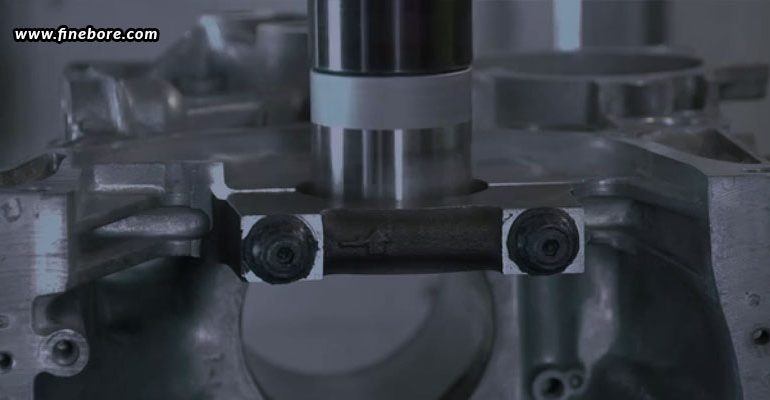
Machines produce motion and power, yet it is the tooling that ultimately determines the quality of the final feature. Factors such as rigidity, fine adjustment resolution, repeatability, and vibration damping directly influence bore accuracy and surface integrity. High-precision tooling allows for controlled micron-level adjustments without the need for repeated trial cuts, reducing variation among operators, shifts, and production batches while enhancing process stability. However, achieving true tolerance discipline cannot rely solely on hardware; it necessitates a cohesive culture that incorporates structured process planning, appropriate tool selection, effective thermal management, in-process measurement, and ongoing operator training. When precision is embraced as a collective organizational goal rather than a mere machining target, the outcome is not only enhanced dimensional consistency but also improved productivity, predictability, and overall operational excellence.
In high-performance manufacturing, microns are critical business variables that affect efficiency, reliability, cost, and reputation. While “good enough” machining may seem cost-effective in the short run, its hidden expenses accumulate across production lines and throughout the product lifecycle. In contrast, precision converts accuracy into a competitive edge. Manufacturers who recognize this transition will not only avert failures but will also develop operations that are faster, smarter, and more profitable. As one of the top boring head manufacturers in India, FineTech Toolings provides micron-level precision with high-rigidity, precisely adjustable tooling that minimizes variation, stabilizes processes, and assists manufacturers in achieving consistent, production-ready precision across challenging machining applications.