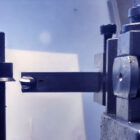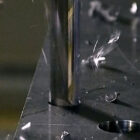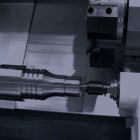
Precision, in boring operations, is not just a choice; it is essential. Whether machining aerospace parts or automotive bores, runout can be the difference between a perfect fit and parts that need to be discarded. Even with the most advanced boring tools, excessive runout undermines dimensional accuracy, tool longevity, and surface quality. For manufacturers aiming to uphold strict tolerances and decrease cycle times, prioritizing the elimination of runout is crucial. This blog discusses strategies to eliminate runout through intelligent tool selection, optimized holder systems, balancing methods, and digital presetting.
What is runout?
Runout, in machining, refers to the radial deviation of a rotating tool’s cutting edge from its intended axis, and it is a critical factor that directly influences accuracy and surface finish. It is generally categorized into two types: radial and axial. Radial runout occurs when the cutting edge shifts away from the true centreline, while axial runout arises when the cutting tool’s face is not perfectly perpendicular to the spindle. Both conditions can lead to serious issues in boring operations. Even the slightest runout, measured in just a few microns, can result in oversized bores, poor dimensional accuracy, uneven wear on inserts, increased tool costs, and inconsistent surface quality. In high-precision machining, maintaining runout below 5 microns is considered acceptable, as anything beyond that can compromise performance. Minimizing runout is therefore essential, not only for ensuring tighter tolerances but also for extending tool life and maintaining productivity in modern manufacturing.
Strategies to eliminate runout
Tool selection
Careful selection of boring tools is essential to minimize built-in imbalance and enhance rigidity. Key considerations include:
- Monoblock vs. modular: While monoblock tools provide inherent stability, modular systems deliver flexibility with interchangeable heads, which when assembled correctly, ensure excellent concentricity.
- Insert design: Opt for positive rake inserts to achieve balanced cutting forces and improved chip control. For finishing passes on non-ferrous metals, select cermet or PCD to reduce friction and wear.
- Tool length: Choose the shortest tool feasible for the bore depth, as longer tools can increase deflection and runout.
Precision holders
The connection between the machine spindle and the boring tool is where the majority of runout occurs. Tool holders are vital for preserving alignment and absorbing vibrations. Recommended holder types include:
- Hydraulic chucks: Ideal for dampening vibrations and ensuring tight concentricity
- Shrink-fit holders: Offer high gripping force and minimal runout, typically less than 3 microns
- HSK/Capto interfaces: Provide dual-contact for enhanced stability under load
Tip: Regularly clean the holders and spindle interfaces. Small chips or coolant residue can cause misalignment and increase runout.
Balanced assembly
Tool imbalance frequently acts as a hidden contributor to runout. A dynamically balanced boring assembly guarantees smoother rotation and extends tool longevity. Balancing strategies include:
- Looking for visual cues like scallop marks on bore walls or atypical tool wear
- Checking balance using balancing machines or software-enabled tool pre-setters
- Utilizing pre-balanced tool heads
- Aligning extensions and adapters that are balanced as a complete set
Modular tools
Modular boring tools can achieve the same level of precision as monoblock tools, given that the components are assembled meticulously. The best practices for assembly include:
- Refraining from mixing components from various brands
- Utilizing torque wrenches to guarantee uniform tightening across all components
- Selecting modular systems featuring form-fit locking, rather than merely friction-fit, to preserve axial integrity
Presetting & digital offsets
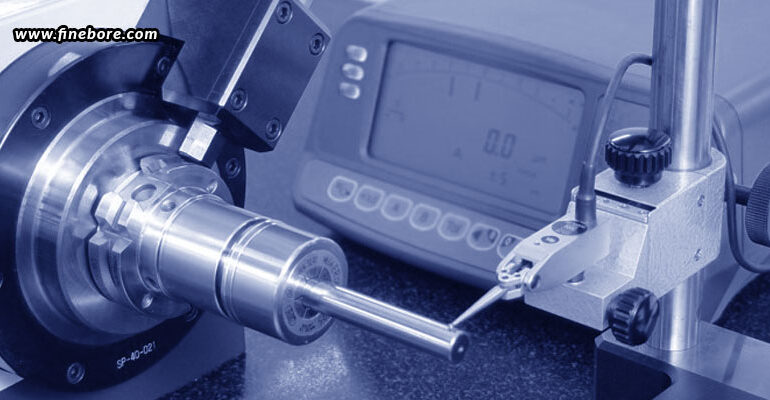
Utilizing digital pre-setters for offline presetting tools guarantees that your boring bar is precisely the correct length and diameter before it makes contact with the workpiece. The advantages include:
- Minimization of trial cuts and waste
- Storing length and diameter offsets within CNC controllers
- Facilitating repeatability in environments with high variability and low production volume
When paired with precision tools, digital presetting improves repeatability and bolsters predictive maintenance initiatives.
Runout and ROI: The importance of addressing microns
You may ask – why dedicate so much effort to addressing just a few microns of runout? The answer lies in the cascading benefits that directly influence quality, productivity, and profitability.
- Reduced scrap: Eliminating runout prevents the production of undersized, oversized, or oval bores, which often lead to rejected parts and wasted material. This ensures higher yield rates and greater reliability in mixed-part machining.
- Extended tool lifespan: A properly balanced cutting edge minimizes vibration, thermal stress, and uneven wear on inserts. This not only lowers tooling expenses but also reduces unexpected downtime caused by premature tool failures.
- Increased speeds and feeds: When vibration is reduced, machines can safely operate at higher cutting parameters, enabling more aggressive and efficient material removal without compromising dimensional accuracy.
- Improved surface finish: Consistency in bore quality is critical for parts requiring sealing, assembly, or further precision processes. Runout reduction ensures smoother finishes with fewer secondary operations.
Every micron of improvement translates into measurable savings in cycle time, tooling costs, and rework, making runout control indispensable in high-precision machining.
Adopting a zero-runout approach is a strategic advantage
Eliminating runout is not merely a machining detail; it’s a strategic advantage that directly impacts efficiency, quality, and profitability. From carefully selecting the right cutting tools and ensuring holder precision to incorporating digital presetting systems and balanced assemblies, every decision influences the stability of a boring operation. A zero-runout approach not only enhances bore accuracy, but also reduces tool wear, improves cycle times, and delivers consistent surface finishes. For manufacturers aiming for precision in mixed-part machining or high-precision machining, the setup of boring tools must exceed mere functionality; it must achieve perfection. Addressing runout isn’t about chasing microns; it’s about building a system where every element contributes to repeatability, reliability, and high performance.
In today’s competitive manufacturing environment, where tolerances are shrinking and profit margins are under constant pressure, achieving zero runout is not optional, it’s essential. This is where expert tooling partners like Finetech Toolings, trusted boring tools suppliers in Bangalore, come into play, delivering solutions tailored to meet the most stringent performance criteria. By investing in the right setup and eliminating runout, manufacturers not only safeguard product quality but also unlock sustainable profitability. Precision is no longer a choice; it’s the cornerstone of long-term success in high-performance machining.