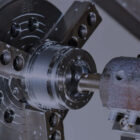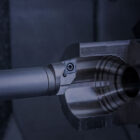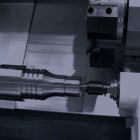
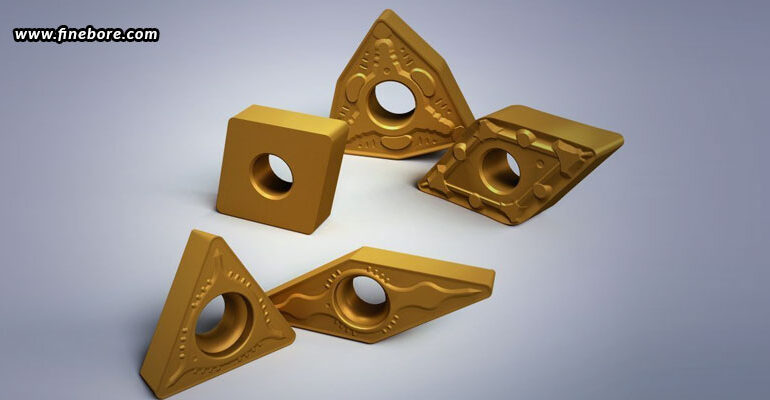
Choosing the right insert for your boring head is one of the most important choices one has to make in the machining process. That’s because inserts can have a direct impact on the performance of the boring operations such as cutting performance, surface quality, tool longevity, and production efficiency. Different insert materials perform differently under different conditions, which is why it is important that each material uses an insert tailored to its distinct characteristics. The blog below offers an in-depth examination of three primary insert types, namely carbide, cubic boron nitride, and ceramic, along with understanding the advantages, limitations, and applications they are best suited for.
Understanding the role of inserts in boring operations
With boring heads designed to enlarge and finish pre-drilled holes with tight tolerances, the insert that is affixed to the head is responsible for the actual cutting process, making its material composition and geometry crucial for optimal machining performance. The inserts are responsible for affecting the cutting efficiency, surface finish quality, tool life, and finally, cost-effectiveness. However, no single insert material is ideal for every application; manufacturers are required to align the characteristics of the insert with the material being machined. The three main materials that are prevalent in precision boring operations are carbide inserts, CBN inserts, and ceramic inserts; however, each type has its own unique strengths and limitations. Let’s learn in detail about these inserts, understanding their performance characteristics, material compatibility, and optimal use cases.
Carbide inserts
Carbide inserts are those that have tungsten carbide particles bonded with cobalt, providing an excellent combination of hardness and toughness, making then the most preferred type of insert used in boring operations.
- Advantages
Carbide inserts, with their compatibility and durability, are ideal for a wide range of materials like steel, stainless steel, aluminium, and cast iron. They have excellent heat resistance, as they can endure moderate, or even high temperatures, without deforming. These inserts come in various coatings like TiN, TiCN, and TiAlN that can enhance performance, while also making them resistant to abrasive wear, rendering them a long tool life.
- Limitations
With amazing compatibility and durability characteristics, you may consider carbide inserts to be the best choice. But, these inserts, like any other, come with their own limitations too. These inserts are not ideal for machining extremely hard or heat-resistance materials like hardening tool steel or superalloys. Moreover, excessive heat generation at very high cutting speeds can lead to premature wear or micro-chipping. In such situations, it becomes necessary to switch to other advanced materials like CBN or ceramic inserts.
- Applications
Carbide inserts are well suited for carbon steel, stainless steel, cast iron, and aluminium alloys, but not for hardened tool steel or superalloys. These inserts are extensively used in general-purpose boring, and precision holes in machineries, where both efficiency and accuracy are essential. Their versatility makes them an essential choice in both small-scale and large-scale industrial production settings.
CBN inserts
Cubic Boron Nitride (CBN) inserts have a high ranking of hardness, making them suitable to machine hardened steel, tool steel, and superalloys, with remarkable precision. These inserts retain their cutting edge at even elevated temperatures, making them suitable for high-temperature applications, where dimensional consistency is guaranteed.
- Advantages
CBN inserts have exceptional hardness and can withstand any amount of wear. With such superior wear resistance, these inserts are ideal for both continuous as well as interrupted cutting of hardened materials. Moreover, they also have excellent thermal stability characteristics, which makes them capable of withstanding temperatures over 1000°C without compromising structural integrity. They also have an extended tool like, and can offer high surface finish quality, making them perfect for final finishing passes in precision bores.
- Limitations
Despite their hardness and wear resistance, CBN inserts come with certain limitations. While CBN inserts are effective when used on hardened steel, they aren’t apt for softer or non-ferrous materials. Moreover, they are prone to thermal shock, and are not ideal for interrupted cuts or heavy roughing operations, where edge chipping or premature tool failure are possible. Finally, the cost associated with CBN inserts is much higher compared to other options like carbide, making them less cost-effective for general machining tasks.
- Applications
CBN inserts are best suited for hardened tool steels, bearing steels, case-hardened components, and superalloys. They excel in finish boring operations, where precision and consistency are paramount, such as in aerospace engine housings, hydraulic components, and die cavities. They also provide tight tolerances while decreasing cycle times in hard turning or boring tasks.
Ceramic inserts
Ceramic inserts are engineered for high-speed machining, apt for difficult-to-cut materials. They also have exceptional hardness and are capable to withstand high cutting temperatures, making them ideal for tasks involving heat-resistant superalloys and cast irons.
- Advantages
Ceramic inserts possess outstanding heat resistance and remarkable wear resistance. They are capable of dry machining without the need for any coolant, and are also capable of effectively managing abrasive materials. Their exceptional performance at even elevated cutting speeds make them ideal for CNC machines operating at high RPMs. These inserts are also capable of delivering reliable results even under significant loads, bringing a consistent surface finish.
- Limitations
Ceramic inserts are brittle, and are prone to chipping or cracking under mechanical shock or heavy cuts, and also breakage under excessive vibration. They aren’t touch enough to be used in unstable setups or low-speed operations. Instead, they need rigid machine setups, stable tool holding, and uniform cutting conditions to maintain dimensional accuracy and prevent edge failure.
- Applications
Ceramic inserts are best suited for nickel-based alloys, cast iron, and hardened steel. They find applications in automotive brake systems, aerospace engine components, and turbine housings. These inserts perform exceptionally well in the aerospace and energy industries, where they facilitate efficient machining of the challenging materials involved, without the need for any coolant, thus reducing thermal shock and minimizing cycle time.
Factors to consider when choosing inserts
Choosing the right insert for your boring head requires a thorough understanding of all the above aspects, along with the material being machined and the machining conditions. Let’s note down in detail some other factors that are important to consider when choosing inserts.
- Workpiece material: As much tougher or more heat-resistant the material, the more advanced the insert will be required. For instance, carbide inserts are ideal for steel and cast iron, CBN inserts are ideal for hardened steel, while ceramic inserts are best for superalloys and nickel-based materials.
- Cutting speed and feed rate: Increased speeds require inserts with better heat resistance, such as ceramic or TiAlN-coated carbide. Carbide or CBN inserts can work for slower speeds with interrupted cuts.
- Surface finish requirements: CBN or fine-grain carbide inserts are best suited for tasks that demand mirror-like finishes or sub-micron tolerances.
- Machine rigidity and tool holding: Carbide inserts are best suited for machines prone to vibration or unstable tool setups, while ceramic inserts are ideal for rigid, high-speed machines.
- Coolant and lubrication: While CBN and ceramic inserts perform efficiently under dry machining conditions due to their heat resistance, carbide inserts generally require coolant to enhance tool life, minimize thermal wear, and prevent built-up edge formation on the cutting surface.
Partnering with the right tooling expert
Choosing the right insert for your boring head is just one aspect of attaining optimal boring performance; partnering with a skilled tooling manufacturer guarantees lasting success. Finetech Toolings is recognized as one of the top boring head manufacturers in India that not only offers access to precision-engineered systems, but also expert advice on material-specific inserts. Whether choosing carbide for its versatility, CBN for its hardness, or ceramic for its heat resistance, the right boring head-insert combination improves speed, precision, and surface finish. With a good understanding of the specifics, and Finetech Toolings as your reliable partner, machining teams can consistently achieve high-quality results that align with contemporary industry standards.