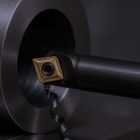
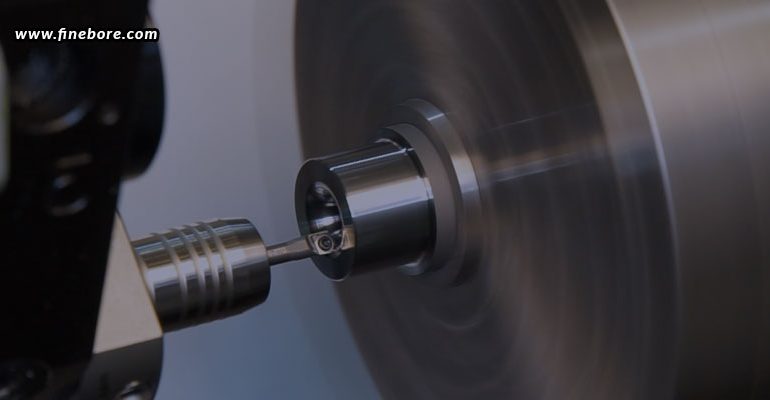
Modern manufacturing necessitates outstanding precision, especially for components featuring small internal bores, where even minute deviations at the micron level can impact performance and reliability. Sectors such as aerospace, automotive, medical devices, and precision engineering depend on highly accurate internal machining to adhere to rigorous quality standards. In these contexts, the effectiveness of a micro boring bar is crucial, as it directly affects dimensional accuracy, surface finish, and geometric consistency. Engineered for stability in tight machining environments, micro boring bars address the challenges associated with small-diameter internal boring. This blog delves into how micro boring bars consistently achieve tight tolerances.
The need for greater precision in internal boring
External machining processes typically offer better accessibility, enhanced tool rigidity, and simpler chip removal. Conversely, internal machining introduces a unique array of challenges. When working on an internal bore, the cutting tool functions within a confined area where visibility is restricted, chip evacuation is more complex, and the tool must extend into the workpiece. As bore diameters decrease, these challenges become more pronounced. Unlike external turning, where maintaining tool stability is relatively straightforward, internal boring necessitates that the cutting tool remove material while countering bending, vibration, and thermal effects within a limited cutting zone. Even a minor shift in tool position can influence bore diameter, roundness, concentricity, or surface finish. Micro boring bars are specifically crafted to navigate these constraints while upholding the precision required for contemporary advanced manufacturing applications.
Understanding the role of a micro boring bar
A micro boring bar is a highly specialized precision cutting tool intended for enlarging, refining, and accurately finishing pre-machined holes. Unlike drills that create new holes, a micro boring bar removes a small, controlled quantity of material from the internal surface to meet exact dimensional specifications. It is frequently utilized in industries where even minute deviations can impact product performance. This tool aids in achieving precise bore diameters, enhancing roundness and cylindricity, correcting alignment errors from previous machining processes, improving surface finish, and ensuring concentricity with adjacent features. Given that the material removed is minimal, the tool’s rigidity, balance, and resistance to vibration are crucial for machining accuracy. A high-quality micro boring bar guarantees consistent performance, repeatable outcomes, and dependable machining of complex, high-precision components in demanding manufacturing environments.
Key design features that facilitate tight tolerances
The effectiveness of a micro boring bar is significantly influenced by its design. Several engineering attributes directly enhance machining accuracy.
- High rigidity
Rigidity is the most vital attribute of a micro boring bar, as it reduces tool deflection under cutting forces. This leads to superior dimensional accuracy, improved surface finish, minimized chatter, enhanced process stability, and considerably extended tool life during precision machining.
- High-quality tool holding
Even the most precise boring bar cannot function effectively if it is not held correctly. Precision tool holders minimize spindle runout and ensure consistent alignment between the machine spindle and the cutting edge. This directly contributes to enhanced bore accuracy.
- Optimized tool length
Longer tools can lead to increased flexibility and vibration. Whenever feasible, manufacturers opt for the shortest boring bar that can access the machining area. Minimizing overhang significantly enhances stability without compromising accessibility.
- Precision cutting edge geometry
Micro boring inserts are designed with optimized cutting geometries that produce lower cutting forces, which diminishes vibration while enhancing chip control. This results in smoother surface finishes, greater dimensional consistency, predictable material removal, and reliable machining performance in precision applications.
- Secure insert clamping
The movement of the insert during machining has an immediate impact on bore size. Precision clamping systems guarantee that the insert stays firmly in place throughout the machining process, even under continuous production conditions. Consistent insert positioning also facilitates tool replacement and reduces the need for setup adjustments.
How micro boring bars address the challenges in micro internal boring
While micro boring offers remarkable precision, it also introduces various technical challenges that manufacturers need to address.
- Challenge 1: Tool deflection
One of the main issues in micro boring is tool deflection, as the slender design of the tool makes it more prone to bending under cutting forces. Even slight deflection can jeopardize bore accuracy, resulting in oversized or tapered holes. Factors such as excessive tool overhang, insufficient rigidity, high cutting forces, and incorrect machining parameters all lead to increased deflection.
Solution: To enhance stability, it is crucial to minimize overhang, utilize rigid boring bars, and optimize cutting conditions. High stiffness-to-diameter ratios help reduce bending while allowing for precise machining of deep internal features.
- Challenge 2: Vibration and chatter
Chatter poses a significant challenge in internal boring since vibrations can adversely affect bore accuracy and surface finish. The limited support for the tool inside the hole exacerbates these vibrations, resulting in poor finishes, inconsistent diameters, shortened tool life, and higher rejection rates of components during precision machining.
Solution: Manufacturers can mitigate chatter by employing rigid designs, balanced assemblies, optimized speeds, stable workholding, and advanced materials that dampen vibrations, thereby improving micro boring accuracy and stability.
- Challenge 3: Limited chip evacuation
Internal boring generates chips within a confined space, making effective chip evacuation crucial. Inefficient chip removal can harm finished surfaces, elevate cutting forces, lead to chip entrapment, and accelerate tool wear, particularly when machining small-diameter bores with restricted internal clearance.
Solution: Ensuring proper coolant delivery and optimizing cutting parameters facilitate efficient chip evacuation, preventing machining disruptions. Effective chip management enhances precision, surface quality, and overall reliability in boring.
- Challenge 4: Thermal expansion
The heat produced during machining results in thermal expansion of both the cutting tool and the workpiece, which can impact precision at micron-level tolerances. This thermal instability may cause variations in bore size, inconsistent measurements, and decreased process stability during prolonged production runs.
Solution: To minimize dimensional changes due to heat, it is essential to maintain a consistent coolant flow, choose appropriate cutting conditions, and utilize thermally stable tooling materials.
- Challenge 5: Maintaining concentricity
Ensuring concentricity is vital for precision components, as the internal bores must be accurately aligned with external diameters and associated features. Any misalignment can lead to assembly problems, diminish functionality, and adversely affect the overall performance and reliability of the component.
Solution: Micro boring bars offer the precise cutting action needed to rectify minor alignment discrepancies while preserving accurate geometric relationships throughout the component.
Choosing the right micro boring bar for your application
Choosing the right boring bar necessitates a thorough assessment of application-specific factors that extend beyond just the bore diameter. Important aspects to consider include tolerance specifications, bore depth, the material of the workpiece, machine capabilities, spindle speed, surface finish requirements, and production volume. A well-suited boring bar guarantees enhanced machining accuracy, uniform results, prolonged tool life, and improved overall efficiency in high-precision manufacturing operations. For manufacturers, partnering with a dependable precision tooling provider is crucial for achieving consistent machining outcomes. The ideal tooling solution not only boosts bore accuracy but also increases productivity and mitigates process-related issues. FineTech Toolings provides state-of-the-art micro boring kits designed for high-precision machining tasks. Every micro boring kit is built for accuracy, rigidity, and reliable performance, assisting manufacturers in attaining superior bore quality, outstanding surface finishes, and dependable results in complex components that demand micron-level precision.
As industries progress towards smaller, intricate, and highly precise components, micro boring bars remain essential in advanced manufacturing. These precision instruments address internal machining difficulties by managing deflection, minimizing vibration, enhancing chip removal, and preserving bore accuracy. In addition to achieving stringent tolerances, they facilitate stable, repeatable, and efficient production processes. By selecting the appropriate micro boring bar and implementing effective machining techniques, manufacturers can ensure consistent quality and dependability. As engineering requirements continue to escalate, micro boring bars will be indispensable for providing the precision and performance necessary in contemporary manufacturing.