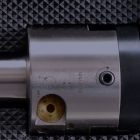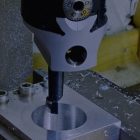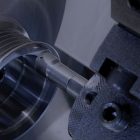
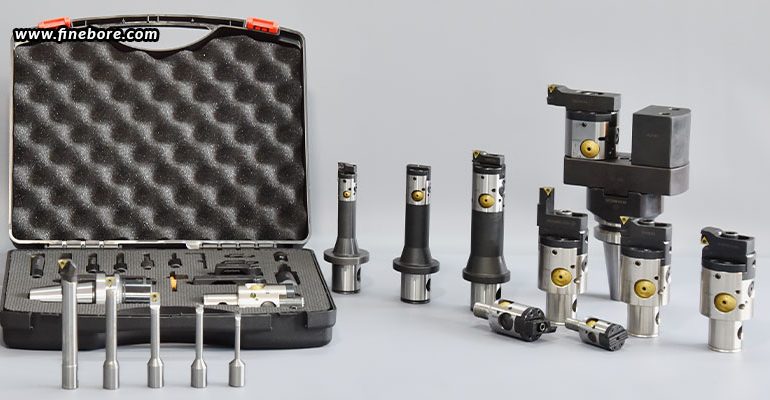
In ultra-precision machining, when bore diameters fall below 10 mm and tolerances shrink into the micron range, conventional tooling design principles are no longer sufficient. At this scale, Even the smallest inconsistency can lead to deviation in the final component, making a high-quality micro boring kit essential for reliable results. Micro boring tools are not just smaller versions of standard boring bars; they are highly refined systems designed to maintain rigidity, minimize vibration, and deliver consistent performance in constrained environments. Their design helps achieve the dimensional accuracy, geometric precision, and surface integrity required in critical industries. This blog examines the core design features that enable micro boring tools to deliver micron-level accuracy, and why each of these features plays a decisive role in high-precision hole finishing.
How does tool design influence bore accuracy in micro boring?
In micro boring, the margin for error is exceptionally small. Even slight tool deflection, thermal expansion, or spindle runout of just a few microns can result in tapered or bell-mouthed bores, loss of roundness, inferior surface finish, and misalignment with mating parts. Such discrepancies are intolerable in high-precision sectors where bore geometry significantly impacts assembly accuracy and functional performance. To mitigate these problems, the tool must function as a rigid, vibration-resistant, and geometrically stable cutting system under highly constrained conditions. This requires meticulously engineered shank materials with high stiffness, precision-ground cutting edges, secure insert clamping, and optimized tool overhang. Each design component collaborates to manage cutting forces, minimize micro-chatter, and uphold true positional accuracy throughout the machining process.
Key design features that determine precision
The features outlined below work together to improve rigidity, stability, vibration management, and dimensional uniformity, ensuring reliable operation in high-precision micro boring tasks within challenging manufacturing settings.
- High rigidity-to-diameter ratio
Rigidity plays a crucial role in micro boring, as smaller diameters and longer reaches heighten the risk of deflection. Achieving a high rigidity-to-diameter ratio through optimized cross-sections and minimal overhang ensures that the cutting edge remains on a precise path under load. This stability helps maintain bore size, straightness, and surface finish while preventing issues such as vibration, chatter, and dimensional variation during precision machining processes.
- Advanced tool material selection
The choice of tool material significantly impacts bending resistance and vibration damping. Micro boring tools are crafted from high-modulus, thermally stable materials that retain their geometry under cutting forces. This enhances dimensional control, boosts process reliability, and prolongs tool life in continuous production environments. Additionally, stable material behaviour guarantees consistent performance when machining high-value components with extremely tight tolerances.
- Optimized overhang length
The length of overhang has a direct impact on tool stiffness and cutting stability. Even a minor increase in projection can diminish rigidity and heighten vibration at the cutting edge. Therefore, precision micro boring systems are designed to minimize unnecessary extension and ensure secure clamping. Proper optimization of overhang length enhances dimensional repeatability, preserves bore roundness and cylindricity, and supports dependable machining performance in deep, small-diameter applications.
- Precision insert seating and clamping mechanism
The accuracy of insert positioning is vital for achieving micron-level tolerances. Any micro-movement at the insert seat can alter bore size and geometry. High-precision tools feature ground insert pockets and robust clamping systems to ensure repeatable positioning. These features reduce the need for frequent offsets and trial cuts, maintaining consistent cutting conditions throughout multiple insert indexing cycles.
- Micro-geometry of the cutting edge
Cutting edge micro-geometry is engineered for low feed rates and shallow cutting depths. The design features sharp edges, a controlled edge radius, and optimized rake and clearance angles, facilitating smooth material removal while minimizing cutting forces. This approach reduces heat generation, prevents the formation of built-up edges, and results in an exceptional surface finish, particularly when machining ductile materials in small-diameter precision boring tasks.
- Integrated vibration damping capability
Small tool diameters are particularly vulnerable to dynamic instability and chatter. The integration of damping – achieved through advanced materials, structural design, and optimized mass distribution – effectively suppresses vibration at its source. This efficient damping mechanism ensures dimensional consistency, safeguards surface integrity, and allows for stable cutting at elevated speeds and feeds. Such capabilities are vital for attaining repeatable micron-level accuracy in challenging micro-boring applications.
- High-precision tool holding interface
The connection between the spindle and the tool is a crucial element in the accuracy chain. Any runout at this junction is magnified at the cutting edge. High-precision holders, characterized by tight tolerances and balanced assemblies, guarantee true rotation and minimal radial error. A stable interface fosters consistent cutting forces, enhances bore geometry, and enables dependable ultra-precision machining performance.
- Through-coolant capability for process stability
Effective coolant delivery is essential for stabilizing the cutting zone by regulating temperature and removing chips from confined bores. In micro boring, this practice prevents chip congestion, mitigates thermal distortion, and upholds dimensional consistency throughout extended machining cycles. Additionally, efficient coolant flow enhances tool longevity and supports continuous cutting, crucial for preserving accuracy in high-value components.
- Fine adjustment and diameter control mechanisms
Precision adjustment systems facilitate micron-level control of bore diameter without the need for repeated trial cuts. These mechanisms allow for incremental corrections, quicker setups, and precise compensation for tool wear. Fine diameter control is especially crucial when working with costly materials, where each pass must be meticulously managed. It boosts productivity while maintaining tight tolerances and predictable processes.
- Surface finish-oriented design
In micro bores, surface finish often fulfils functional roles such as sealing efficiency, fluid regulation, and resistance to wear. Tool designs that promote stable cutting, uniform chip formation, and vibration-free operation yield high-quality surfaces. This reduces or eliminates the need for secondary finishing processes and ensures that the bore satisfies both geometric and functional criteria in precision assemblies.
- Balance and rotational stability
At elevated spindle speeds, even slight imbalances can create centrifugal forces that compromise bore accuracy. Precision micro boring tools are dynamically balanced to ensure smooth rotation and reduce harmonic vibrations. Stable high-speed performance maintains roundness, safeguards the cutting edge, and guarantees consistent dimensional control in small-diameter, high-RPM machining settings that demand extreme accuracy and repeatability.
- Modular and application-specific configurations
Modular micro boring systems offer flexibility without compromising precision. Interchangeable components enable optimized tool lengths for varying bore depths and allow for quick adjustments to different applications. This guarantees consistent accuracy across setups while minimizing downtime. The modular design accommodates both small-batch high-precision tasks and large-scale production, delivering repeatable performance in a variety of machining environments.
As industries progress towards stricter tolerances, smaller components, and more intricate assemblies, the need for reliable micro boring solutions is steadily increasing. The most advanced micro boring tools are characterized not just by their compact size, but by their capacity to maintain rigidity in limited spaces, accurately control cutting forces, and consistently achieve micron-level precision throughout production cycles. These performance characteristics have a direct impact on dimensional control, surface quality, and process dependability. For manufacturers aiming for exceptional quality, enhanced productivity, and sustained global competitiveness, partnering with proven solution providers such as FineTech Toolings and adopting a high-performance micro boring kit is not simply a technical enhancement, but a strategic choice that strengthens overall manufacturing capability and ensures long-term process reliability.