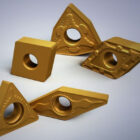
Silent machining is about quiet cuts bringing stability, balance, and control – all crucial elements in producing accurate and high-quality bores – which signals nothing but perfection. But, when there is chatter, the high-pitched vibration, it highly affects precision, efficiency, and profitability. To eliminate this chatter, boring bar manufacturers in India are increasingly turning to vibration-damped boring bars to redefine machining standards in today’s high-speed, high-accuracy production environments. This enables smoother and quieter cutting with finer surface finishes, while also extending tool life, reducing downtime, and enhancing the overall consistency of machining processes.
The problem – Chatter
Chatter is a mechanical instability that arises when a cutting tool vibrates against the workpiece, which occurs due to the interaction between the cutting forces, tool stiffness, and system dynamics. Chatter becomes especially problematic when long-reach tools are often required as the tool tends to deflect and oscillate at its free end. This results in poor surface finish, lower productivity, increased rework and scrap, and reduced tool life. Vibrations create ripples and marks, which compromises dimensional precision. Moreover, fluctuating loads cause premature wear and breakage. Machinists are thus forced to reduce cutting speeds and feeds to stabilize the process, which lowers productivity.
The solution – Vibration-damped boring bars
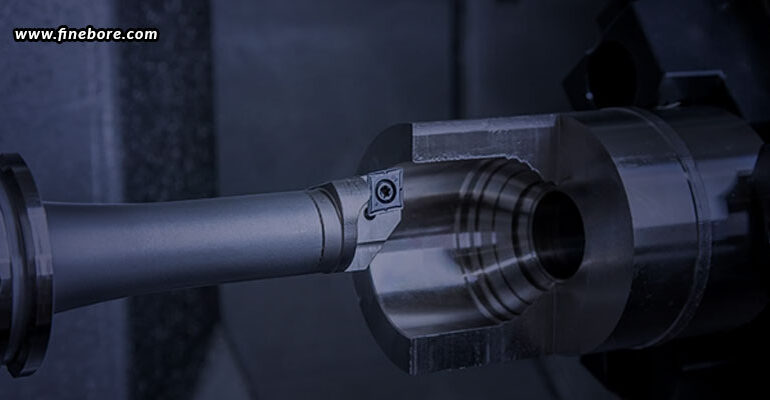
With the compromised surface finish and lower productivity, and the fact that machinists are required to reduce their cutting speeds and feeds, there is one ultimate solution to counter all of this – vibration-damped boring bars! These are specialized boring bars engineered to suppress oscillations during deep-hole boring or extended-reach operations. Unlike conventional boring bars, which rely solely on stiffness, vibration-damped boring bars integrate damping mechanisms that absorb and counteract vibration energy in real time. A typical vibration-damped boring bar comprises of an outer body made of high-strength steel or carbide for rigidity, and internal damping mechanism, and a replaceable cutting head or insert holder that ensures modularity and adaptability. These components convert vibrational energy into heat through controlled friction or fluid movement, effectively neutralizing chatter before it grows into a resonance problem.
Benefits of vibration-damped boring bars
Vibration-damped boring bars offer significant advantages over standard boring bars, enhancing machining performance through superior finish, extended tool life, higher productivity, consistent precision, and quieter working conditions.
- Superior surface finish: By effectively eliminating chatter marks, vibration-damped boring bars deliver mirror-like surface finishes. This high precision minimizes, or even eliminates, secondary finishing operations, significantly saving machining time, labour costs, and production effort.
- Increased tool life: Vibration damping minimizes cutting shocks and uneven insert wear, significantly extending tool lifespan. This stability reduces tool replacement frequency, lowers operational costs, and enhances overall machining efficiency and reliability.
- Higher productivity: With reduced chatter and enhanced stability, machinists can safely increase cutting speeds and feeds. This boosts machining throughput, shortens cycle times, and delivers greater productivity without sacrificing quality or precision.
- Consistent accuracy: Vibration-damped boring bars maintain tool stability throughout deep or long-reach bores, ensuring dimensional consistency. This precision improves part quality, reduces rework, and supports reliable production of tight-tolerance components.
- Reduced noise and operator fatigue: By minimizing vibrations, these boring bars create quieter machining environments. Lower noise levels reduce operator fatigue, enhance focus, and promote safer, more comfortable working conditions over extended operations.
Standard vs. Vibration-damped boring bars
Vibration-damped boring bars revolutionize precision machining by minimizing chatter, improving surface finish, and enabling higher cutting speeds, offering superior performance and stability compared to standard boring bars.
- Chatter resistance: Traditional boring bars struggle with stability at high depth-to-diameter ratios, whereas vibration-damped bars excel at suppressing chatter, ensuring smooth, stable, and precise cutting even during deep-bore machining operations.
- Surface finish: Conventional boring bars often need post-polishing to achieve a fine finish, while vibration-damped bars deliver superior surface quality directly, minimizing secondary finishing and improving overall machining efficiency and aesthetics.
- Cutting speed: Standard boring bars are limited by vibration at high speeds, but vibration-damped designs enable faster cutting speeds without sacrificing accuracy, enhancing productivity and overall process efficiency in demanding operations.
- Tool life: Traditional boring bars experience quicker wear due to vibration and deflection. Vibration-damped bars, however, extend tool life by maintaining stability, reducing wear, and preventing vibration-induced insert or tool fatigue.
- Cost: While traditional boring bars are more affordable initially, vibration-damped bars justify their higher cost through longer lifespan, improved machining efficiency, reduced scrap, and greater overall return on investment for precision workshops.
- Application: Standard boring bars suit general-purpose or shallow operations, while vibration-damped boring bars excel in high-precision, long-reach, and hard-material applications demanding stability, accuracy, and superior surface quality.
Though vibration-damped boring bars are more expensive initially, their superior stability, surface quality, and longevity often offset the cost in high-value production environments, making them indispensable for precision machining.
Application areas
Vibration-damped boring bars find applications across diverse industries where precision, stability, and superior surface finish are essential, making them vital in industries like aerospace, automotive, medical manufacturing, heavy engineering, and energy production.
- Aerospace industry
Machining titanium and nickel-based alloys for turbine components and structural parts demands long-reach boring with impeccable stability. Vibration-damped bars are indispensable in this field, ensuring accuracy under extreme cutting conditions.
- Automotive industry
Engine blocks, transmission housings, and precision bores for fuel systems benefit from chatter-free operations. Damped bars enhance cycle time while maintaining consistent bore alignment.
- Medical manufacturing
For orthopaedic implants or surgical instruments, where surface integrity is critical, vibration-damped tools deliver the precision and fine finishes required for biocompatible materials like titanium or PEEK.
- Heavy engineering and energy sectors
In machining large hydraulic cylinders, valves, or turbines, long bores amplify vibration risks. Damped boring bars improve process stability, reducing downtime and scrap.
Key factors to consider when selecting a vibration-damped boring bar
Selecting the right vibration-damped boring bar requires balancing performance and cost. Key factors like bore ratio, material, machine rigidity, cutting parameters, and ROI determine overall precision, stability, and machining efficiency.
- Bore depth-to-diameter ratio: Higher ratios amplify vibration risks, making effective damping crucial for maintaining stability, accuracy, and surface quality during deep boring operations.
- Workpiece material: Hard or gummy materials demand specific damping frequencies to ensure smooth cutting, reduced chatter, and extended tool life.
- Machine rigidity: Tool performance depends heavily on machine stiffness; without a stable spindle and setup, damping efficiency and precision diminish significantly.
- Cutting parameters: Optimizing cutting speed, feed rate, and tool overhang ensures maximum damping performance, minimizing vibration and improving overall machining productivity.
- Cost vs. return: Though initially expensive, vibration-damped boring bars deliver long-term ROI through reduced scrap, fewer tool changes, and improved machining efficiency.
Vibration-damped boring bars are becoming the new benchmark in precision machining. Their ability to suppress chatter, extend tool life, and improve surface finish makes them indispensable for today’s workshops striving for excellence. While standard boring bars still serve well in short-reach or general machining scenarios, any operation dealing with deep bores, hard materials, or tight tolerances stands to gain tremendously from adopting damping technology. In essence, “silent cutting” is not just about reducing noise; it’s about redefining standards for performance, precision, and productivity in the machining world.
Among the leading boring bar manufacturers in India, Finetech Toolings stands out for its precision-engineered solutions that meet the demands of modern machining. Their advanced vibration-damped boring bars are designed to deliver exceptional stability, surface accuracy, and consistency across challenging applications, helping industries achieve superior performance and productivity.