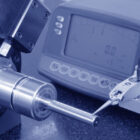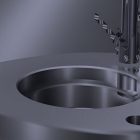
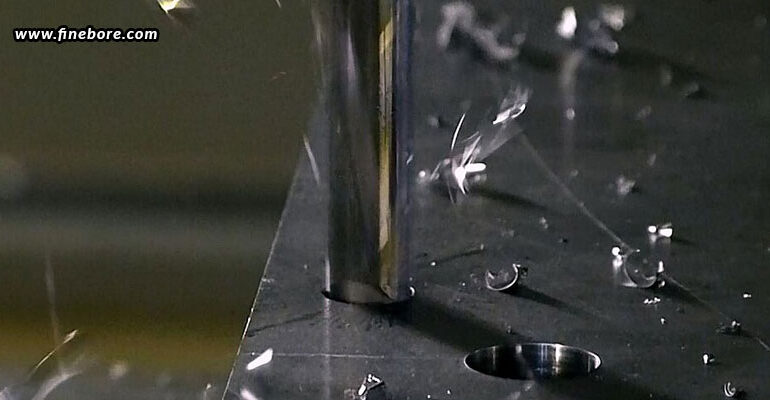
The demand for precision machining has rapidly increased as industries strive to innovate in design, materials, and miniaturization. Whether manufacturing components for aircraft engines, medical implants, or high-performance automotive parts, small diameter boring is an essential process that necessitates unwavering accuracy. Achieving precision in this process is significantly influenced by selecting the right boring tools, managing cutting parameters, and ensuring the stability of the machining environment. Let’s delve into the challenges associated with small-diameter boring and offer practical advice for enhancing accuracy through the right tools and methods.
Understanding small diameter boring
Small diameter boring refers to the process of enlarging or finishing holes that are generally less than 10 mm in diameter. In industries like aerospace, medical devices, electronics, and automotive manufacturing, the demand for precise micro-boring has surged. Components like fuel injectors, hydraulic parts, surgical instruments, and precision couplings frequently require bores with stringent tolerances and smooth surface finishes. The significance of accuracy in this context is substantial. For example, a minor deviation in the bore of a fuel injector could result in diminished engine performance or failure. Likewise, in the case of medical implants, precision is crucial for ensuring patient safety and the reliability of the product.
Challenges in small diameter boring
Machining small bores presents distinct challenges that are not typically faced in larger-diameter boring. Some of the most prevalent issues include –
- Tool deflection – The smaller the boring bar, the less rigid it becomes. This increased susceptibility to bending or deflection during cutting can compromise accuracy.
- Vibration and chatter – With reduced tool mass, vibrations are more likely to occur, resulting in inferior surface finish and dimensional inaccuracies.
- Heat buildup – The confined space within small bores hinders effective coolant access to the cutting edge, leading to excessive heat generation and premature tool wear.
- Alignment issues – Even minor misalignments between the spindle and workpiece can result in poor concentricity.
- Tool wear – Smaller tools are inherently more fragile, and their cutting edges tend to wear out rapidly, particularly when machining tough alloys.
Due to these challenges, conventional boring techniques frequently prove inadequate. Therefore, the process necessitates meticulously engineered solutions and precise execution.
Tips for ensuring precision in small diameter boring
Once the right tool is selected, machinists must focus on the process parameters and setup to minimize errors. Below are proven tips to improve accuracy –
- Choose the right tool holder
A high-quality, rigid tool holder is essential for minimizing deflection and vibration during small-diameter boring. Choosing the right tool holder can make the difference between inconsistent results and achieving true precision. To achieve such levels of stability and precision, many machinists rely on Finetech Toolings, a trusted name for precision boring tools in Bangalore, known for designing solutions that minimize vibration and ensure accuracy in demanding operations.
- Balance cutting parameters
Cutting speed, feed rate, and depth of cut must be carefully controlled to achieve accuracy. Excessive cutting speed can lead to heat buildup, while speeds that are too low may result in poor chip evacuation. Maintaining a steady and controlled feed rate helps prevent tool chatter, and applying small, consistent depths of cut ensures stability while reducing tool stress.
- Control vibration
Vibration is a common issue in small-diameter boring, and controlling it is key to precision. Using dampened boring bars designed with anti-vibration technology greatly improves results. Keeping tool overhang to a minimum – ideally less than three times the tool’s diameter – further reduces instability. Employing balanced machining strategies also helps minimize cutting forces and vibration.
- Optimize coolant delivery
Proper coolant delivery plays a vital role in chip evacuation and tool longevity. High-pressure through-tool coolant systems are particularly effective for small bores. For ultra-small applications, mist lubrication or minimum quantity lubrication (MQL) may provide better results. In every case, coolant should be directed precisely at the cutting edge for maximum effectiveness.
- Ensure proper workholding
Even the slightest movement of the workpiece can compromise accuracy. Precision vices, chucks, or custom fixtures should be used to maintain maximum rigidity during machining. Alignment must always be checked carefully before starting the operation to avoid errors.
- Monitor tool wear
Small-diameter tools tend to wear out more quickly, so frequent inspection is necessary. Using coated tools, such as those with TiAlN or CVD diamond coatings, enhances durability and performance. Additionally, CNC machines equipped with tool life monitoring systems ensure consistent results and reduce the risk of unexpected tool failure.
Selecting the right boring tools
The key to achieving precision is in choosing the right boring tools for the task. Let’s examine some essential tool types.
- Solid carbide boring bars
Solid carbide boring bars are the go-to choice for small diameters because of their exceptional rigidity. They deliver outstanding surface finishes and high dimensional precision, which are critical in applications where accuracy cannot be compromised. Moreover, their durability against tool wear makes them especially suitable for machining challenging materials like titanium and stainless steel, ensuring consistent performance even under demanding conditions.
- Indexable boring tools
Indexable boring tools are widely used in high-volume production environments. With replaceable inserts, they offer a cost-effective and practical solution without compromising performance. Their versatility in cutting-edge geometries and coatings provides machinists with the flexibility to adapt to different materials. However, they are generally more appropriate for slightly larger small-diameter ranges, typically over 6-8 mm.
- Micro-boring heads
Micro-boring heads bring another level of precision to machining operations. These precision-adjustable tools allow micrometre-level adjustments to the bore diameter, making them especially beneficial in applications where tolerances are within just a few microns. Such accuracy is essential in industries like aerospace and medical manufacturing, where components such as turbine parts or orthopaedic devices demand flawless performance and consistency.
- Custom-designed tools
Custom-designed tools become essential when standard options fail to meet the required tolerances. Although they may carry a higher upfront cost, these tools are tailored to specific application needs, ensuring exact results. In the long run, they help manufacturers save by minimizing scrap, reducing rework, and enhancing productivity, making them a smart investment for specialized machining tasks.
Balancing cutting parameters
Achieving accuracy in small-diameter boring depends heavily on how well cutting parameters are managed. Cutting speed, feed rate, and depth of cut must be carefully balanced to avoid tool damage, poor surface finish, or dimensional errors. Each parameter plays a distinct role, and together they determine the overall quality of the bore.
- Cutting speed
The cutting speed has a direct impact on both accuracy and tool life. Excessive speed generates heat at the cutting edge, leading to premature wear and dimensional errors. On the other hand, operating at very low speeds can cause poor chip evacuation, increased friction, and an uneven surface finish. The ideal speed strikes a balance – fast enough for efficient cutting but controlled to prevent overheating.
- Feed rate
Feed rate must be carefully managed to avoid tool chatter and deflection. A feed that is too aggressive increases vibration and instability, while a feed that is too light causes the tool to rub against the material rather than cut effectively. A steady, controlled feed rate that aligns with tool geometry and workpiece material ensures better accuracy and consistency.
- Depth of cut
Small-diameter boring requires shallow, consistent depths of cut to maintain tool stability. Attempting deep cuts can overload the tool, generate excessive forces, and compromise accuracy. Taking smaller, controlled cuts minimizes stress on both the tool and the workpiece, improving overall precision and surface finish.
- Achieving the right balance
The best results come from optimizing all three parameters together—cutting speed, feed rate, and depth of cut. When carefully balanced, they reduce tool wear, enhance surface quality, and ensure precise bores even under demanding conditions. For small-diameter boring, this harmony is essential to achieving micron-level accuracy.
Small diameter boring is among the most challenging machining processes, necessitating an ideal combination of appropriate tools, techniques, and technology. From the choice of solid carbide boring bars to the implementation of digital boring heads, each decision significantly impacts accuracy. By managing vibration, enhancing coolant delivery, and ensuring stable setups, machinists can reliably produce precise outcomes. In industries where even a micron of deviation can result in failure – such as aerospace, automotive, and medical devices – investing in suitable boring tools is crucial. Through meticulous tool selection, process refinement, and the integration of contemporary innovations, small-diameter boring can be elevated from a challenge to a competitive edge.